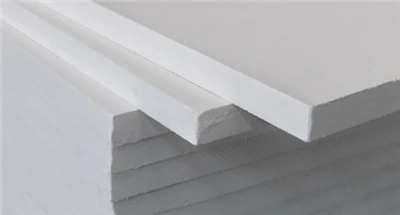
In modern commercial fit-out and public infrastructure projects, choosing the right ceiling system directly impacts indoor acoustics, fire safety, and long-term maintenance costs. Among the many ceiling materials on the market, the durable mineral fiber drop ceiling stands out as a top choice due to its balanced performance and reliability.
However, mineral fiber tiles vary greatly in density, moisture resistance, and acoustic ratings across different manufacturers. For overseas contractors, architects, and building material importers, understanding the core technical standards is essential. Here is a practical guide covering five key industry metrics to help you evaluate and source high-durability mineral fiber ceiling tiles.

1. Sag Resistance and Relative Humidity (RH) Ratings
One of the most common failures in standard mineral fiber tiles is sagging or warping in humid environments. This ruins the visual appearance and can eventually cause tiles to slip out of the suspension grid.
Core Metric: Always check the product's Relative Humidity (RH) rating before purchasing.
Industry Benchmark: Standard economy tiles usually tolerate environments up to RH 70%. In contrast, a true durable mineral fiber drop ceiling uses high-density inorganic fibers and a specialized moisture-resistant backing. This allows it to achieve an RH 90% or RH 95% rating, keeping the tiles flat and rigid even in coastal climates or buildings where HVAC systems are not yet running.
2. Dual Acoustic Metrics: NRC and CAC
Many buyers only look at sound absorption when evaluating acoustic ceilings, but a complete assessment requires checking two complementary values:
Noise Reduction Coefficient (NRC): Measures how much sound the tile absorbs to reduce indoor echoes. The rating ranges from 0 to 1. For open-plan offices, school classrooms, and hospital corridors, choose durable mineral fiber tiles with an NRC of 0.55 to 0.70 or higher.
Ceiling Attenuation Class (CAC): Measures how effectively the tile blocks sound from traveling over partition walls into adjacent rooms. For private executive offices, boardrooms, and medical exam rooms, look for high-density tiles with a CAC of 35dB or higher to guarantee speech privacy.
3. Fire Safety Ratings and International Certifications
Commercial and public buildings are governed by strict fire safety codes. Make sure your ceiling tiles meet the specific testing standards required by your target export market:
North American Market: Tiles must comply with ASTM E84 and achieve a Class A fire rating (Flame Spread Index of 25 or less, Smoke Developed Index of 50 or less).
European and Middle Eastern Markets: Tiles must meet EN 13501-1 standards, typically requiring a classification of A2-s1, d0 or B-s1, d0.
Health and Sustainability: Verify that the tiles are 100% asbestos-free and carry low-VOC certifications to comply with green building frameworks like LEED and BREEAM.
4. Edge Profiles and Grid Compatibility
The final visual look of a drop ceiling depends on how the tile edges interact with the metal suspension grid (T-Grid). Common edge designs include:
Square Edge (Lay-in): The face of the tile sits flush with the bottom of the grid. It is fast to install, cost-effective, and ideal for large standard office spaces.
Tegular Edge (Reveal): The edge features a stepped notch, allowing the tile face to drop slightly below the grid. This creates a clean, three-dimensional shadow line suited for upscale offices and hotel lobbies.
Concealed Edge: The grid is completely hidden inside the tile edges, creating a smooth, monolithic ceiling surface for high-end conference rooms and showrooms.
Sourcing Tip: Always verify that the tile dimensions (metric 595x595mm versus imperial 603x603mm / 2'x2') match your grid face width (T15 narrow grid or T24 standard grid). Sourcing both the tiles and the T-Grid system from the same manufacturer prevents tolerance mismatches on the job site.
5. Quick Physical Checks for Sample Evaluation
When inspecting physical samples from a supplier, use these three simple checks to verify product durability:
Inspect the Core and Backing: A quality durable mineral fiber tile has a fine, uniform fiber cross-section without large, loose clumps. The back should feature a reinforced moisture-resistant coating or embossed texture.
Test Flexural Strength: Hold the sample by its edges and apply gentle pressure. High-density, durable tiles feel rigid and resilient without flaking dust or snapping easily.
Check Light Reflectance (LR): Examine the smoothness of the white surface paint. Premium tiles deliver a light reflectance rate of 85% or higher, which maximizes natural and artificial lighting and lowers building energy costs.

Sourcing a durable mineral fiber drop ceiling requires looking beyond the unit price. Evaluating the RH sag-resistance rating, NRC and CAC acoustic values, regional fire certifications, and grid compatibility ensures you deliver a reliable product to your market. Partnering with an experienced manufacturer with strict quality control protects project timelines and reduces long-term maintenance costs for building owners.