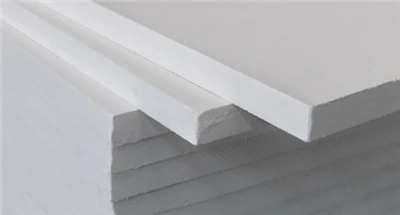
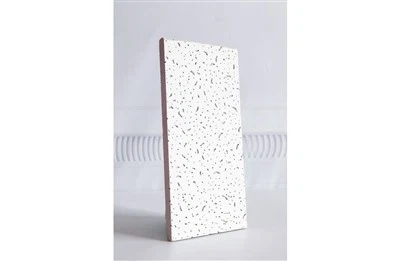
When sourcing commercial ceiling systems, Mineral Fiber Ceiling Tiles are the go-to choice for architects and contractors globally. They offer an ideal balance of acoustic control, fire safety, and cost-efficiency. However, a "one-size-fits-all" approach does not work in modern architecture.
To help building material importers and project managers make informed decisions, SEYI breaks down the core technical specifications you must consider to match your tiles to specific project environments.
1. Acoustic Performance: Balacing NRC and CAC
Acoustic comfort is the primary reason commercial projects opt for mineral fiber ceilings. When reviewing technical data sheets, you will encounter two critical metrics:
NRC (Noise Reduction Coefficient): This measures how much sound the tile absorbs inside the room. An NRC of 0.50 means 50% of the sound is absorbed, while 50% is reflected. For busy call centers, open-plan offices, or classrooms, you should source high-performance tiles with an NRC of 0.60 to 0.70+ (typically achieved via fine-fissured or pin-hole micro-perforations).
CAC (Ceiling Attenuation Class): This measures how much sound is blocked from traveling between adjacent rooms through the ceiling plenum. Private meeting rooms and executive offices require a high CAC of 35 to 40 dB to ensure speech privacy.
2. Sizing and Thickness Flexibility: Meeting Regional Standards
Different markets operate under strict local building cultures. Sourcing from a manufacturer with flexible dimensional capabilities prevents on-site installation delays.
Grid Compatibility: Ensure your tiles perfectly match the suspension T-grid system. The standard metric grid requires 595×595mm or 600×1200mm tiles, while imperial markets (like North America) rely on 2'×2' (603×603mm) or 2'×4' (603×1210mm) layouts.
Thickness Control: Thickness (ranging from 7mm to 20mm) directly impacts both the product's acoustic rating and its physical weight. Thicker tiles offer superior sound absorption but increase dead load and shipping costs.
3. Humidity Resistance (RH Rating): Protecting Against Sag
One of the biggest risks with low-quality mineral fiber ceilings is "sagging"-where the tiles warp downward over time due to moisture absorption.
The Cause: High relative humidity (RH) weakens the binders holding the mineral wool fibers together.
The Solution: For tropical climates, coastal projects, or buildings where air conditioning is turned off over weekends, it is crucial to specify tiles with RH85, RH90, or RH95 ratings. These are formulated with premium perlite and specialized binders to retain structural flatness even in damp conditions.
4. Edge Profiles and Architectural Aesthetics
The choice of edge profile drastically alters the final visual impact of the space:
Square Edge (Lay-in): The tile sits flat in the T-grid, exposing the grid lines. It is economical, easy to replace, and ideal for standard corridors and utility areas.
Tegular Edge (Reveal): The tile drops slightly below the grid, creating a three-dimensional shadow line. This adds depth and a premium look to corporate lobbies and boardrooms.
Concealed Edge: The tiles interlock to completely hide the suspension grid, creating a monolithic, smooth continuous surface.
The SEYI Advantage: Engineering Tailored Ceilings
At SEYI, we understand that every commercial project comes with unique budget constraints, climate challenges, and acoustic requirements. By utilizing advanced wet-forming production lines, we provide fully flexible specifications-allowing you to customize dimensions, adjust NRC/CAC ratings, and boost humidity resistance to perfectly fit your target market's needs.