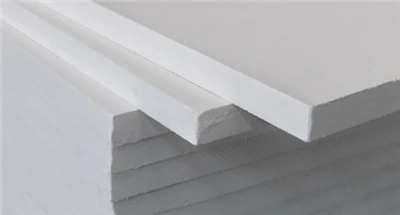
Selecting the optimal thermal insulation material directly impacts furnace energy efficiency, equipment lifespan, and operational safety. Among various refractory backup materials, low density calcium silicate board stands out due to its balance of lightweight structure and thermal resistance. Here is a practical guide to help engineers and buyers choose the right specification.
1. Determine the Maximum Operating Temperature
Calcium silicate boards are generally categorized into two temperature grades based on their crystal structure (tobermorite vs. xonotlite):
650°C Grade: Suitable for low-to-medium temperature boilers, steam pipelines, and HVAC ductwork.
1000°C – 1050°C Grade: Formulated with xonotlite crystals, making it ideal for high-temperature furnaces in the steel, cement, glass, and ceramic industries. Always ensure the board's rated temperature exceeds your interface temperature by at least 50°C–100°C.
2. Evaluate Density vs. Mechanical Strength
A low density calcium silicate board typically ranges between 220 kg/m³ and 280 kg/m³.
Lower Density (220–240 kg/m³): Offers lower thermal conductivity and lighter structural load, making it ideal for furnace roofs and vertical walls.
Higher Density (250–280 kg/m³): Provides higher compressive strength, which is necessary when the board needs to support heavy refractory bricks or castables at the bottom of a furnace.
3. Check Thermal Conductivity at Mean Temperature
Do not just compare thermal conductivity at room temperature. Always check the value at your actual working mean temperature (e.g., 300°C or 500°C). A high-quality low density calcium silicate board should maintain a thermal conductivity below 0.075 W/(m·K) at 300°C to effectively block heat transfer.
4. Verify Asbestos-Free Certification
Ensure your supplier provides third-party test reports (such as SGS or CE) confirming the material is 100% asbestos-free. This protects installation workers from health hazards and ensures compliance with strict import regulations in North America and Europe.
5. Best Practices for Installation
Staggered Joints: Install boards in two layers with staggered joints to eliminate thermal bridges.
Moisture Protection: Store boards in a dry warehouse before installation. If applied behind wet refractory castables, cover the calcium silicate board with a waterproof plastic film to prevent water absorption.