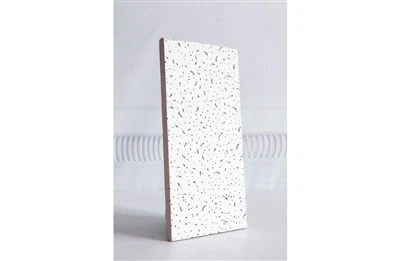
As a supplier of fine fissure mineral fiber boards, ensuring the quality of our products is of utmost importance. Fine fissure mineral fiber boards are widely used in the construction industry for ceiling and wall applications due to their excellent acoustic, thermal insulation, and fire-resistant properties. In this blog post, I will share some key methods and considerations on how to check the quality of fine fissure mineral fiber boards.
1. Visual Inspection
The first step in checking the quality of fine fissure mineral fiber boards is a visual inspection. This can provide a quick overview of the board's surface condition and any obvious defects.
- Surface Appearance: A high - quality fine fissure mineral fiber board should have a smooth and uniform surface. The fine fissures should be evenly distributed and of consistent size. Any signs of unevenness, bumps, or rough patches may indicate problems during the manufacturing process. For example, if the board has large areas where the fissures are missing or over - concentrated, it may affect the aesthetic appeal and potentially the performance of the board.
- Color Consistency: The color of the board should be consistent throughout. Variations in color may suggest differences in the raw materials used or inconsistent manufacturing conditions. A board with a uniform color is more likely to be of higher quality as it indicates a well - controlled production process.
- Edge Quality: The edges of the board should be straight and clean. Any chipping, cracking, or uneven edges can make the installation process more difficult and may also affect the overall stability of the board once installed.
2. Physical Properties Testing
After the visual inspection, it is necessary to conduct some physical properties tests to ensure the board meets the required standards.
- Density Measurement: Density is an important parameter for fine fissure mineral fiber boards. A proper density ensures the board has the right balance of strength and insulation properties. To measure the density, you can cut a small sample from the board and measure its mass and volume. The density is then calculated by dividing the mass by the volume. Generally, a higher - density board may have better strength but could also be more brittle, while a lower - density board may offer better insulation but less strength. The ideal density range depends on the specific application of the board.
- Thickness Tolerance: The thickness of the board should be within the specified tolerance. You can use a caliper to measure the thickness at multiple points on the board. Significant variations in thickness can lead to problems during installation, such as uneven ceilings or walls. A board with a consistent thickness is easier to install and provides a more professional finish.
- Flexural Strength Test: Flexural strength refers to the ability of the board to resist bending. This can be tested by applying a load at the center of a supported board. A high - quality fine fissure mineral fiber board should have sufficient flexural strength to withstand normal handling and installation without breaking. If the board breaks easily during the flexural strength test, it may not be suitable for use in areas where it may be subjected to some degree of stress.
3. Acoustic Performance Evaluation
One of the main advantages of fine fissure mineral fiber boards is their acoustic performance. Therefore, evaluating the acoustic properties is crucial.


- Sound Absorption Coefficient: The sound absorption coefficient measures how well the board absorbs sound. This can be measured using specialized equipment in a laboratory environment. A higher sound absorption coefficient indicates better acoustic performance. Boards with good sound absorption are ideal for use in areas such as offices, classrooms, and auditoriums where noise reduction is important.
- Noise Reduction Coefficient (NRC): The NRC is a single - number rating that represents the average sound absorption of a material over a range of frequencies. A higher NRC value means the board is more effective at reducing noise. When selecting fine fissure mineral fiber boards for acoustic applications, it is recommended to choose boards with an NRC of at least 0.70 or higher.
4. Thermal Insulation Testing
Thermal insulation is another important property of fine fissure mineral fiber boards, especially in buildings where energy efficiency is a concern.
- Thermal Conductivity: Thermal conductivity measures the ability of the board to conduct heat. A lower thermal conductivity indicates better thermal insulation performance. Thermal conductivity can be measured using a heat flow meter. Boards with good thermal insulation properties can help reduce energy consumption by keeping the indoor temperature more stable, which is beneficial for both residential and commercial buildings.
5. Fire Resistance Assessment
Fire resistance is a critical factor for building materials, especially in public buildings and areas where fire safety is a top priority.
- Fire Rating: Fine fissure mineral fiber boards should have a suitable fire rating. This can be determined through standardized fire tests. Boards with a higher fire rating are more resistant to fire and can help prevent the spread of flames and smoke in case of a fire. Look for boards that meet relevant fire safety standards, such as Class A fire - rated boards, which offer the highest level of fire resistance.
6. Chemical Composition Analysis
The chemical composition of the fine fissure mineral fiber board can also affect its quality and performance.
- Fiber Content: The board should have an appropriate fiber content. High - quality boards typically contain a sufficient amount of mineral fibers, which contribute to the board's strength, insulation, and fire - resistant properties. You can use microscopy or chemical analysis techniques to determine the fiber content and the type of fibers used.
- Binder Content: Binders are used to hold the fibers together in the board. The amount and type of binder can affect the board's properties. An excessive amount of binder may reduce the board's breathability and acoustic performance, while too little binder may result in a weak board. Chemical analysis can help determine the binder content and ensure it is within the optimal range.
Conclusion
Checking the quality of fine fissure mineral fiber boards involves a comprehensive approach that includes visual inspection, physical properties testing, acoustic performance evaluation, thermal insulation testing, fire resistance assessment, and chemical composition analysis. By ensuring that our products meet high - quality standards, we can provide our customers with reliable and long - lasting building materials.
If you are interested in purchasing high - quality fine fissure mineral fiber boards, we are here to assist you. Our MINERAL FIBER CEILING TILE FACTORY is equipped with advanced production technology and strict quality control systems to ensure the best products. We offer a wide range of Mineral Fiber Ceiling Tiles/Board that can meet different customer needs. Our MINERAL FIBER CEILING BOARD FACTORY is committed to providing you with the highest - quality products at competitive prices. Contact us for more information and to start a procurement negotiation.
References
- Building Materials Testing Standards Handbook
- Acoustic and Thermal Insulation Materials Research Reports
- Fire Safety Standards for Building Products