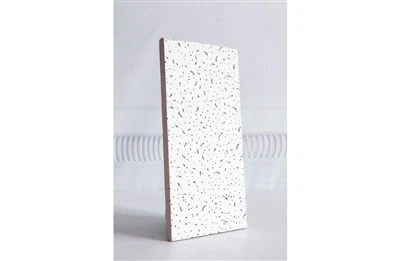
As a supplier of pinhole mineral fiber boards, I am frequently asked about the thermal insulation properties of our products. In this blog post, I will delve into the science behind the thermal insulation of pinhole mineral fiber boards, explore their benefits, and discuss their applications.
Understanding Thermal Insulation
Thermal insulation is the process of reducing the transfer of heat between two objects or spaces at different temperatures. In buildings, thermal insulation plays a crucial role in maintaining a comfortable indoor environment, reducing energy consumption, and lowering heating and cooling costs.
The effectiveness of thermal insulation is measured by its thermal resistance, which is expressed in units of R-value (in the United States) or RSI-value (in Canada). The higher the R-value, the better the insulation's ability to resist heat flow.
How Pinhole Mineral Fiber Board Provides Thermal Insulation
Pinhole mineral fiber boards are made from mineral fibers, such as rock wool or slag wool, which are bound together with a resin or binder. The board is then perforated with small holes, creating a pinhole pattern on its surface.
The thermal insulation properties of pinhole mineral fiber board can be attributed to several factors:
1. Low Thermal Conductivity
Mineral fibers have a naturally low thermal conductivity, which means they are poor conductors of heat. This property allows the pinhole mineral fiber board to slow down the transfer of heat through the material.
2. Air Trapped in the Pinholes
The pinholes on the surface of the board create small pockets of air. Air is a poor conductor of heat, and these trapped air pockets act as additional insulation, further reducing the heat transfer through the board.
3. Dense Structure
Pinhole mineral fiber boards have a dense structure, which helps to prevent the movement of air and heat. The dense fibers create a barrier that slows down the transfer of heat by conduction, convection, and radiation.
Benefits of Pinhole Mineral Fiber Board for Thermal Insulation
1. Energy Efficiency
By reducing the heat transfer through the building envelope, pinhole mineral fiber board can significantly improve the energy efficiency of a building. This can lead to lower energy consumption and reduced heating and cooling costs.
2. Comfort
A well-insulated building maintains a more consistent indoor temperature, providing a comfortable living or working environment. Pinhole mineral fiber board helps to prevent heat loss in the winter and heat gain in the summer, reducing temperature fluctuations and improving comfort.
3. Sound Insulation
In addition to thermal insulation, pinhole mineral fiber board also provides excellent sound insulation. The dense structure and pinhole design of the board help to absorb and dampen sound waves, reducing noise transmission between rooms or from the outside environment.
4. Fire Resistance
Mineral fibers are inherently fire-resistant, making pinhole mineral fiber board a safe choice for building applications. The board can help to prevent the spread of fire and protect the structure of the building.
Applications of Pinhole Mineral Fiber Board for Thermal Insulation
1. Wall Insulation
Pinhole mineral fiber board can be used as insulation for interior and exterior walls. It can be installed between the studs or on the surface of the wall to provide thermal and sound insulation.
2. Ceiling Insulation
The board is also suitable for ceiling insulation. It can be installed on the ceiling joists or as a suspended ceiling to reduce heat loss through the roof and improve the acoustic performance of the room.
3. Flooring Insulation
In some cases, pinhole mineral fiber board can be used as insulation for floors. It can be installed under the floorboards to reduce heat loss through the floor and improve the comfort of the living space.
4. Industrial Applications
Pinhole mineral fiber board is also used in industrial applications, such as insulation for pipes, ducts, and equipment. Its high-temperature resistance and thermal insulation properties make it a suitable choice for these applications.
Comparing Pinhole Mineral Fiber Board with Other Insulation Materials
When choosing an insulation material, it is important to consider its thermal insulation properties, as well as other factors such as cost, durability, and environmental impact. Here is a comparison of pinhole mineral fiber board with some other common insulation materials:
1. Fiberglass Insulation
Fiberglass insulation is another popular insulation material. While it has good thermal insulation properties, it can be itchy and irritating to the skin. Pinhole mineral fiber board, on the other hand, is less likely to cause irritation and is easier to install.
2. Spray Foam Insulation
Spray foam insulation provides excellent thermal insulation, but it can be expensive and may require professional installation. Pinhole mineral fiber board is a more cost-effective option and can be installed by DIYers.
3. Cellulose Insulation
Cellulose insulation is made from recycled paper and is an environmentally friendly option. However, it has a lower R-value compared to pinhole mineral fiber board and may settle over time, reducing its effectiveness.
Ensuring the Best Thermal Insulation Performance
To ensure the best thermal insulation performance of pinhole mineral fiber board, it is important to follow these installation guidelines:


1. Proper Installation
The board should be installed correctly, with no gaps or voids between the panels. This will prevent air leakage and ensure maximum thermal insulation.
2. Adequate Thickness
The thickness of the pinhole mineral fiber board should be selected based on the desired R-value and the specific application. Thicker boards generally provide better thermal insulation.
3. Sealing Joints
All joints and seams between the boards should be sealed with a suitable sealant to prevent air and moisture infiltration.
4. Vapor Barrier
In some cases, a vapor barrier may be required to prevent moisture from entering the insulation. This is especially important in areas with high humidity or in cold climates.
Conclusion
Pinhole mineral fiber board is an excellent choice for thermal insulation in buildings. Its low thermal conductivity, air-trapping pinholes, and dense structure make it an effective insulator that can improve energy efficiency, comfort, and sound insulation. With its many benefits and applications, pinhole mineral fiber board is a versatile and reliable insulation material.
If you are interested in learning more about our pinhole mineral fiber boards or would like to discuss your specific insulation needs, please feel free to contact us for a quote. We are a leading Mineral Fiber Ceiling Tiles/Board Factory offering a wide range of products, including Square Fine Fissure Mineral Fiber Board and Tegular Sand Mineral Fiber Board. Our team of experts is ready to assist you in finding the perfect insulation solution for your project.
References
- ASHRAE Handbook of Fundamentals. American Society of Heating, Refrigerating and Air-Conditioning Engineers.
- Building Science Corporation. "Thermal Insulation Basics." Online resource.
- Mineral Wool Insulation Manufacturers Association. "Mineral Wool Insulation: A Sustainable Building Solution."