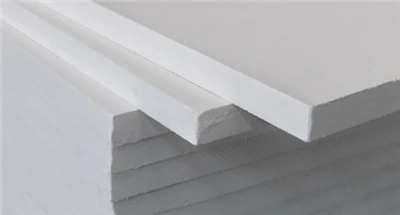
Selecting the right suspended ceiling material plays a critical role in indoor noise control, fire safety, and long-term maintenance costs. Among all commercial ceiling solutions, the Acoustic Mineral Fiber Ceiling Board stands out for its balanced acoustic performance, Class A fire rating, and cost-effectiveness.
However, different building environments require different board specifications. Below is a practical buyer's guide to help contractors, architects, and importers choose the best Acoustic Mineral Fiber Ceiling Board for their projects.
1. Check the Noise Reduction Coefficient (NRC)
The primary function of an acoustic mineral fiber ceiling board is to absorb sound waves and reduce reverberation:
NRC 0.55 – 0.60: Suitable for general office spaces, retail stores, and corridors where moderate noise control is needed.
NRC 0.65 – 0.70+: Recommended for open-plan offices, classrooms, hospital wards, conference rooms, and auditoriums requiring high speech privacy and acoustic comfort.
Tip: Thicker boards (15mm–20mm) and micro-perforated or fissured surface textures generally deliver higher NRC ratings.
2. Verify Humidity Resistance (RH Rating) to Prevent Sagging
In coastal cities, tropical regions, or buildings where air conditioning is turned off overnight, low-grade ceiling tiles can absorb moisture and sag over time.
Always choose a high-density Acoustic Mineral Fiber Ceiling Board rated for RH 90% to RH 95% humidity resistance.
High-density wet-felted boards maintain structural flatness even in humid environments, avoiding costly replacement work after handover.
3. Match the Edge Profile to Your Ceiling Grid Design
The edge treatment determines both the visual appearance and installation method of your ceiling system:
| Edge Type | Grid Compatibility | Visual Effect & Best Application |
|---|---|---|
|
Square Edge |
Standard 24mm or 15mm T-Grid | Sits flush with the grid; economical and fast to install in offices, schools, and supermarkets. |
|
Tegular (Reveal) Edge |
24mm or 15mm T-Grid | Drops slightly below the grid to create a recessed 3D shadow line; ideal for modern corporate offices and hotels. |
|
Concealed Edge |
Concealed T-Grid System | Hides the metal grid completely for a clean, monolithic look in executive suites and lobbies. |
4. Confirm Fire Rating & Environmental Certifications
For public infrastructure and commercial tenders, compliance with international building codes is mandatory:
Fire Performance: Ensure the Acoustic Mineral Fiber Ceiling Board meets ASTM E84 Class A or EN 13501-1 (A2-s1, d0) non-combustible standards.
Indoor Air Quality: Verify that the boards are 100% asbestos-free and formaldehyde-free, contributing to green building certifications such as LEED.
5. Consider Light Reflectance (LR) for Energy Savings
A bright white Acoustic Mineral Fiber Ceiling Board with a Light Reflectance (LR) of 85% or higher bounces natural and artificial light evenly across the room. This reduces eye strain for occupants and lowers commercial lighting electricity bills by up to 15%–18%.
Conclusion
By evaluating NRC ratings, humidity resistance, edge profiles, and fire certifications, buyers can select an Acoustic Mineral Fiber Ceiling Board that delivers long-term durability and superior acoustic comfort.