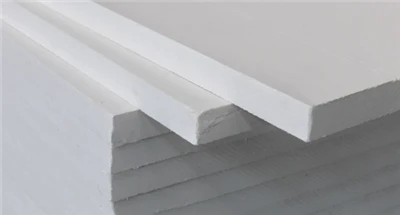
For international architects, structural engineers, and commercial procurement officers, selecting the right architectural substrate is a balance between safety compliance and lifetime maintenance costs. While traditional plasterboards and mineral fiber tiles are common, they frequently fail in demanding environments, leading to sagging, moisture degradation, and compromised fire boundaries. This technical guide explores why the calcium silicate board for ceiling has become the gold standard for high-performance commercial infrastructure and how to evaluate its core technical metrics.
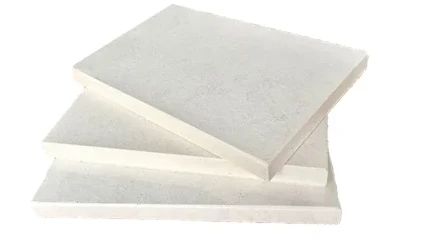
The Science of Dimensional Stability: Density vs. Moisture
The most common failure in commercial ceilings is "sagging," usually caused by high relative humidity (RH) or fluctuating temperatures in spaces like airports, hospitals, and commercial kitchens. A premium calcium silicate board for ceiling solves this through its autoclaved crystalline structure (xonotlite/tobermorite phase). When evaluating boards for your supply chain, density is the critical indicator:
Medium Density (0.8 - 1.1 g/cm³): Ideal for standard commercial grid ceilings and T-bar systems. It offers excellent flexural strength while remaining easy to score, cut, and install on-site.
High Density (> 1.1 g/cm³): Specially engineered for extreme-humidity zones and high-impact areas. High-density boards have an exceptionally low moisture movement coefficient (typically < 0.25%), ensuring the ceiling lines stay perfectly flat for decades.
Passive Fire Protection: Beyond the Non-Combustible Label
Fire compliance is a major liability for global contractors. Many materials claim to be fire-resistant but emit thick, toxic smoke during a thermal crisis. A certified calcium silicate board for ceiling offers Class A1 non-combustibility according to EN 13501-1 or ASTM E84 standards. Because it contains no organic solvents or asbestos fibers, it does not ignite, does not contribute to flashover, and releases zero toxic fumes-providing up to 2 to 4 hours of passive fire rating depending on the system thickness and framing configuration.
Acoustic Optimization and Surface Finishes
Modern commercial spaces require smart interior acoustics. Plain panels can cause high echo and noise levels in open-plan offices or educational facilities. To solve this, advanced manufacturers offer perforated calcium silicate board for ceiling panels. When backed with acoustic non-woven textiles, these boards achieve a high Noise Reduction Coefficient (NRC), combining structural fireproofing with superior sound absorption. Furthermore, the smooth, low-absorption surface reduces paint consumption, allowing for rapid, cost-effective finishing.
Procurement Checklist for International Buyers
When sourcing from global manufacturers, always verify that the supplier provides independent third-party test reports (such as SGS or Intertek) covering flexural strength (≥ 10-12 MPa), water absorption rates, and comprehensive fire resistance. Ensuring the factory utilizes automated packaging with heavy-duty edge protectors is also essential to eliminate transit breakage and guarantee that your calcium silicate board for ceiling shipment arrives ready for immediate, seamless installation.