Evaluating the physical load distribution and material resilience of commercial ceiling suspension systems is a fundamental step for global building material distributors. A failure to calculate correct weight tolerances or atmospheric stress variables can compromise the structural alignment of an entire interior environment. Understanding the technical matrix behind cold-rolled profile manufacturing allows procurement teams to secure code-compliant inventory while optimizing project expenditures.
This industry insight deconstructs the hidden technical parameters of T-Grid engineering that directly impact spatial durability.
1. Deflection Limits and Load-Bearing Dynamics
Every suspended ceiling framework operates under constant mechanical tension. The Main Runners (Main Tees) must support the combined dead load of acoustic panels, light fixtures, insulation blankets, and HVAC air diffusers without bowing.
ASTM C635 Standard Classifications: International building codes categorize grid profiles into Light-Duty (5 lbs/ft max deflection), Intermediate-Duty (12 lbs/ft), and Heavy-Duty (16 lbs/ft) capacities.
The Anti-Deflection Metric: Premium production involves introducing a microscopic upward crown (camber) during the roll-forming process. This pre-engineered curve counteracts the natural gravitational downward pull once heavy mineral fiber or plasterboard panels are dropped into the matrix, guaranteeing a perfectly level visual horizon.
2. Metallurgical Compounding: The Science of Structural Fatigue
The longevity of a T-Bar network depends entirely on the metallurgical integrity of its substrate. Standard low-carbon steel is susceptible to structural fatigue if its zinc crystallization layer is compromised.
Spangle Optimization: High-end factories utilize minimized spangle or zero-spangle hot-dipped galvanized coils. This uniform crystalline structure ensures that when the steel undergoes sharp 90-degree bends during automated roll-forming, the zinc layer stretches fluidly without microscopic cracking.
Torsional Rigidity: To prevent the long profiles from twisting under eccentric loads, advanced designs implement a stitched double-layer steel spine. This mechanical stitching locks the twin vertical walls of the Tee bar together, increasing torsional resistance by up to 30% compared to unstitched variants.
3. Micro-Tolerance Engineering in End-Connection Points
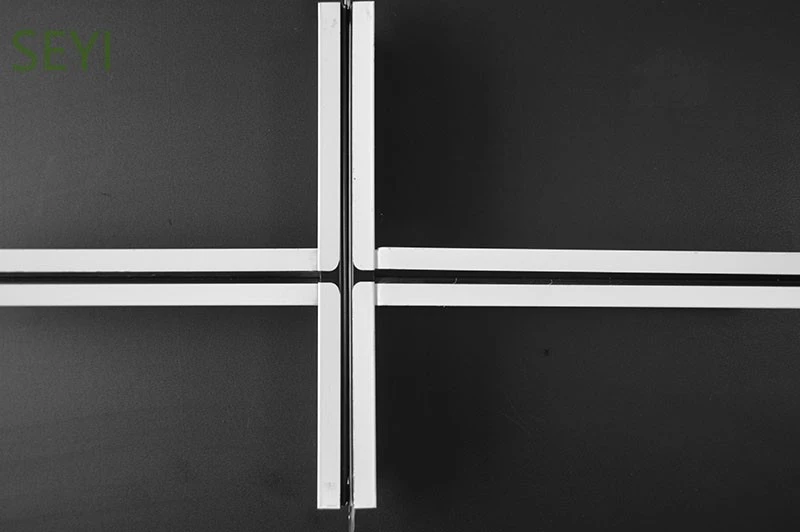
The weakest link in any modular interior grid is the intersection point where Cross Tees pierce or lock into the Main Rows. Even a 0.5mm structural variance across a 100-meter room can compound into a severe layout misalignment.
Expansion Relief Slots: Fire-rated grid systems integrate a stamped geometric cutout along the Main Tee body. Under extreme heat conditions (such as a building fire), these slots are engineered to collapse predictably inward. This localized buckling prevents the entire ceiling grid from twisting violently and dropping the heavy ceiling tiles onto evacuation pathways.
Tensile Disconnect Thresholds: The quick-release mechanism or alloy clip end must balance structural grip with ease of disassembly. High-tier profiles are tested to withstand a minimum horizontal pull-out force of 180 lbs, ensuring safety against seismic micro-vibrations.
4. Surface Coating Polymerization
The visible cap of the T-Grid is not merely painted; it underwent a complex thermal bonding process to resist scratching during transit and installation.
Polyester Baked Finish: The galvanized steel strip is coated with a liquid polyester resin and baked at high temperatures. This creates a non-porous surface that resists color fading (UV degradation) in sunlit atriums and repels surface moisture.
Gloss Level Modulation: Standard commercial architectural specifications demand a flat matte finish (typically 3% to 5% gloss level). This ultra-low reflectivity prevents harsh overhead light fixtures from creating distracting visual glares along the grid lines, providing a premium, seamless ceiling aesthetic.
Strategic Sourcing Outlook for Global Distributors
When importing container-volume grid shipments, evaluating the mere cost per meter often leads to purchasing substandard material that fails structural inspections. Partnering with a manufacturer that prioritizes precise raw material gauge tracking, rigorous pull-out laboratory testing, and robust seaworthy pallet packing is the ultimate safeguard for your supply chain.
Our state-of-the-art production facility remains committed to delivering fully certified, high-performance ceiling grid components tailored to regional structural standards worldwide.