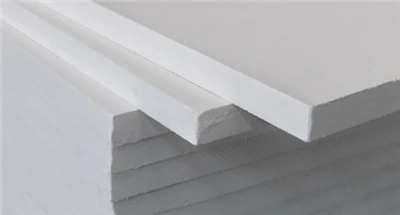
In contemporary interior architecture, the demand for fast, efficient, and high-performance wall systems has led to a major shift from traditional masonry to lightweight drywall partition systems. Among the various lining materials available in the global market, calcium silicate board for partition wall construction has emerged as the premier choice for architects, contractors, and building material distributors worldwide.

Why Calcium Silicate Outperforms Traditional Gypsum Board
While standard gypsum board has long been a staple for budget residential interiors, it possesses inherent vulnerabilities regarding structural strength, moisture vulnerability, and long-term durability. Calcium silicate boards solve these pain points. The autoclaved hydrothermal manufacturing process ensures that the board does not experience the structural degradation associated with paper-faced gypsum when exposed to moisture. Furthermore, calcium silicate boards offer significantly higher impact resistance, making them far more suitable for public commercial spaces where walls are prone to heavy cart bumps and frequent human contact.
Optimizing Acoustic and Fire Performance in Partition Systems
A high-performance interior partition is rarely a single layer of material; it is a carefully engineered system. To maximize the utility of calcium silicate partition boards, installers combine them with light-gauge steel studs (C-studs and U-tracks) and insulation infills.
For Fire-Rated Walls: Utilizing a double-layer of 12mm calcium silicate boards on both sides of a steel framing system can easily achieve a certified 2-hour to 4-hour fire rating, effectively isolating fire zones within commercial malls or industrial warehouses.
For Acoustic Privacy: By filling the cavity with high-density rockwool or glasswool, the system dampens sound transmission across rooms, satisfying the strict STC requirements of hotel guestrooms and hospital wards.
Best Installation Practices for Seamless Finishes
Achieving a flawless, crack-free partition wall requires adherence to professional installation protocols.
Framing Alignment: Ensure the vertical steel studs are spaced accurately, typically at 400mm or 600mm centers, depending on the board thickness and structural requirements.
Expansion Gaps: Leave a 3mm to 5mm expansion gap between the boards to accommodate natural building movements and thermal variations.
Jointing Compound: Use a high-quality fiber-reinforced jointing compound paired with a premium fiberglass or paper joint tape to bridge the recessed edges seamlessly before applying the final skim coat and primer.
By upgrading your building specifications to interior calcium silicate partition boards, you ensure structural longevity, superior safety compliance, and a premium finish that enhances the overall value of any real estate project.