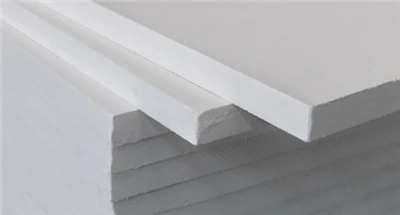
When selecting materials for building facades, architects and contractors must balance structural durability, safety compliance, and aesthetic appeal. Traditional exterior cladding materials like timber, standard plasterboard, or low-grade cement boards often struggle with issues like moisture rot, warping, or poor fire ratings. This is why calcium silicate board for exterior wall applications has become the preferred choice for modern architectural designs.
Understanding the Exterior Cladding System
Unlike interior partitions, exterior walls are directly exposed to dynamic environmental forces. Calcium silicate boards engineered for outdoor use feature a higher density (typically 1.2 to 1.4 g/cm³) than their interior counterparts. They are installed as part of a ventilated facade system or a direct-fix cladding layout. They are mounted onto steel or aluminum sub-frames, creating a reliable rainscreen barrier that protects the inner structure of the building.
Critical Advantages in Outdoor Applications
Moisture Management: Exterior-grade calcium silicate boards feature low moisture movement. Even when completely saturated during heavy downpours, the board exhibits minimal expansion. As it dries, it returns to its exact original dimensions without losing mechanical strength.
Structural Support and Wind Loads: High-density boards offer superior flexural strength. This allows them to withstand high negative and positive wind pressures, which is a vital requirement for high-rise exterior envelopes.
Thermal and Acoustic Efficiency: By acting as the outer protective skin, these boards reduce thermal bridging. When paired with insulation materials like rockwool inside the wall cavity, they significantly improve the building's energy efficiency and sound insulation indices.
Installation Tips for Longevity
To ensure the maximum lifespan of your exterior cladding, proper installation practices must be followed. Always use corrosion-resistant stainless steel or galvanized screws for fixing. Maintain a minimum joint gap of 3mm to 5mm between boards to allow for natural structural movement, and seal the joints with high-quality, polyurethane-based exterior sealants. Finally, apply a breathable, UV-resistant exterior primer and topcoat paint to give the facade its final decorative finish and an extra layer of weatherproofing.
By investing in high-grade exterior calcium silicate boards, project owners ensure long-term structural safety, complete fire compliance, and a modern aesthetic that stands the test of time.