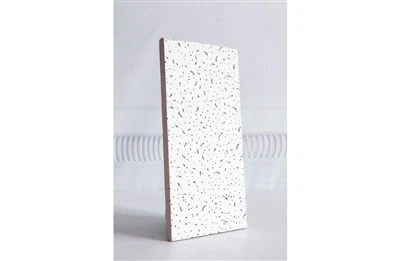
Hey there! As a supplier of acoustic mineral fiber boards, I often get asked if these boards can be used in an airport terminal. Well, let's dive right into it and explore whether acoustic mineral fiber boards are a good fit for such a high - traffic, high - profile space.
1. The Noise Challenge in Airport Terminals
Airport terminals are noisy places. You've got the constant hum of jet engines from nearby runways, the buzz of announcements echoing through the halls, the chatter of thousands of passengers, and the rumbling of luggage carts. All this noise can be overwhelming, not only for passengers trying to relax or catch up on work but also for airport staff who have to work in this environment day in and day out.
Acoustic mineral fiber boards are designed to absorb sound. They work by allowing sound waves to enter the board's porous structure. Once inside, the sound energy is converted into heat energy through friction with the fibers, reducing the amount of sound that is reflected back into the space. This can significantly reduce the overall noise level in an airport terminal, creating a more comfortable and peaceful environment.
2. Fire Safety
Safety is a top priority in any public space, and airport terminals are no exception. Acoustic mineral fiber boards are known for their excellent fire - resistant properties. Most high - quality acoustic mineral fiber boards are classified as non - combustible or have a high fire - rating. This means that in the event of a fire, they won't contribute to the spread of flames, giving passengers and staff more time to evacuate safely.
For example, many acoustic mineral fiber boards are tested to meet international fire safety standards such as ASTM E84. This test measures the surface burning characteristics of building materials, including their flame spread and smoke development. A low flame spread and smoke development rating is crucial in an airport terminal, where a large number of people are present, and visibility and a clear path to exits are essential during an emergency.
3. Durability and Maintenance
Airport terminals are busy places with a lot of foot traffic, cleaning activities, and the occasional accidental impact. Acoustic mineral fiber boards are generally quite durable. They can withstand normal wear and tear, and with proper installation, they can last for many years.
Maintenance is also relatively easy. These boards can be cleaned with regular dusting or light vacuuming to keep them looking good. In case of stains or minor damage, some boards can be easily repaired or replaced without having to redo the entire ceiling or wall installation.
4. Aesthetic Appeal
Airport terminals are not just functional spaces; they are also a reflection of the city or region they serve. Acoustic mineral fiber boards come in a variety of styles and finishes, allowing airport designers to create a visually appealing environment.
For instance, you can check out our Tegular Pinhole Mineral Fiber Board, which has a unique pinhole design that adds a modern and stylish touch. The Tegular Sand Mineral Fiber Board offers a more textured and natural look, while the Square Colors Mineral Fiber Board comes in a range of colors to match different interior design themes.
5. Cost - Effectiveness
When it comes to large - scale projects like airport terminals, cost is always a consideration. Acoustic mineral fiber boards are a cost - effective solution compared to some other high - end acoustic materials. They offer a good balance between performance and price, making them an attractive option for airport authorities looking to improve the acoustic environment without breaking the bank.
6. Installation Considerations
Proper installation is key to getting the most out of acoustic mineral fiber boards. In an airport terminal, where the ceilings and walls may have complex geometries and there are often other systems such as lighting, ventilation, and sprinklers, installation needs to be carefully planned.
Professional installers should be used to ensure that the boards are installed correctly, with proper spacing and alignment. This will not only ensure optimal acoustic performance but also a neat and professional finish.


7. Environmental Impact
In today's world, environmental sustainability is an important factor. Many acoustic mineral fiber boards are made from recycled materials, which reduces the demand for virgin resources. Additionally, they are often low in volatile organic compounds (VOCs), which means they don't release harmful chemicals into the air, contributing to a healthier indoor environment in the airport terminal.
Conclusion
So, can acoustic mineral fiber boards be used in an airport terminal? Absolutely! They offer a range of benefits including noise reduction, fire safety, durability, aesthetic appeal, cost - effectiveness, and environmental friendliness.
If you're involved in an airport terminal project or know someone who is, I'd love to chat with you about how our acoustic mineral fiber boards can meet your specific needs. Whether it's about choosing the right style, discussing installation options, or getting a quote, I'm here to help. Reach out to start a conversation about your procurement needs, and let's work together to create a better acoustic environment in your airport terminal.
References
- ASTM International. (n.d.). ASTM E84 - Standard Test Method for Surface Burning Characteristics of Building Materials.
- Industry reports on acoustic materials for public spaces.