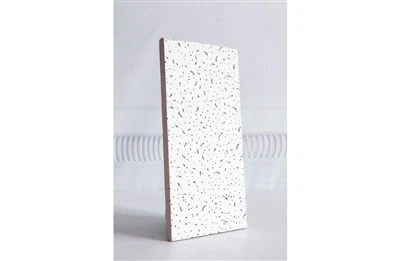
As a supplier of dune mineral fiber boards, I've encountered numerous inquiries from clients about the suitability of our products in vibrating environments. This question is not only relevant but also crucial for industries where machinery operation, transportation, or other activities generate continuous vibrations. In this blog post, I'll delve into the properties of dune mineral fiber boards and analyze their performance in vibrating conditions.
Understanding Dune Mineral Fiber Boards
Dune mineral fiber boards are engineered materials crafted from natural minerals and fibers. These boards are renowned for their exceptional acoustic insulation, fire resistance, and thermal stability. Their composition typically includes inorganic minerals such as rock wool, slag wool, and other ceramic fibers, which are bound together using binders to form a dense and rigid structure.
The manufacturing process of dune mineral fiber boards involves high - temperature melting and spinning of the raw materials, followed by a curing process to enhance their mechanical properties. The result is a board with a uniform texture and consistent performance, making it a popular choice for a wide range of applications, including Mineral Fiber Ceiling Tiles, wall partitions, and insulation systems.
Properties Affecting Performance in Vibrating Environments
Mechanical Strength
One of the primary factors determining a material's ability to withstand vibrations is its mechanical strength. Dune mineral fiber boards possess a relatively high compressive strength, which allows them to resist deformation under pressure. This strength is attributed to the interlocking structure of the mineral fibers and the binding agents that hold them together.
However, it's important to note that the mechanical strength of dune mineral fiber boards can vary depending on factors such as density, fiber orientation, and the quality of the binders used. Higher - density boards generally exhibit greater strength and are more likely to withstand vibrations without significant damage.
Flexural Resistance
In addition to compressive strength, flexural resistance is another critical property for materials in vibrating environments. Flexural resistance refers to a material's ability to bend without breaking. Dune mineral fiber boards have a certain degree of flexibility, which enables them to absorb and dissipate the energy generated by vibrations.
The flexural strength of these boards can be enhanced through proper manufacturing techniques, such as optimizing the fiber distribution and using high - quality binders. A well - designed dune mineral fiber board can withstand repeated bending forces without experiencing cracks or fractures, ensuring its long - term performance in vibrating conditions.
Damping Capacity
Damping capacity is the ability of a material to absorb and dissipate vibration energy. Dune mineral fiber boards have inherent damping properties due to the porous structure of the mineral fibers. When vibrations are applied to the board, the energy is converted into heat within the pores of the material, reducing the amplitude of the vibrations.
This damping effect helps to minimize the transmission of vibrations to adjacent structures, making dune mineral fiber boards an effective solution for noise and vibration control. In applications where noise reduction is a priority, such as in industrial facilities or transportation vehicles, the damping capacity of dune mineral fiber boards can significantly improve the overall comfort and performance of the environment.
Applications in Vibrating Environments
Industrial Machinery
In industrial settings, machinery often generates significant vibrations during operation. Dune mineral fiber boards can be used as insulation and vibration - damping materials around machinery to reduce noise levels and protect surrounding structures. For example, they can be installed as wall linings in machine rooms or as covers for equipment to absorb and dissipate the vibrations.
The fire - resistant properties of dune mineral fiber boards also make them a safe choice for industrial applications. In case of a fire, the boards can act as a barrier, preventing the spread of flames and protecting the machinery and personnel.
Transportation
In the transportation industry, dune mineral fiber boards can be used in vehicles such as trains, buses, and ships. These vehicles are subject to vibrations from the engine, wheels, and the movement of the vehicle itself. By installing dune mineral fiber boards in the interior walls, ceilings, and floors of the vehicles, the vibrations can be reduced, improving the comfort of passengers and reducing noise levels.
The lightweight nature of dune mineral fiber boards is also an advantage in transportation applications, as it helps to reduce the overall weight of the vehicle, leading to improved fuel efficiency.
Construction
In construction projects, dune mineral fiber boards can be used in buildings located near sources of vibration, such as highways or industrial areas. The boards can be incorporated into the wall and ceiling systems to provide acoustic insulation and vibration damping. For example, Dampproof Acoustic Mineral Fiber Ceiling Board can be installed in commercial buildings to reduce the impact of external vibrations and create a more comfortable indoor environment.
Limitations and Considerations
While dune mineral fiber boards offer many advantages in vibrating environments, there are also some limitations and considerations to keep in mind.
Installation Quality
The performance of dune mineral fiber boards in vibrating environments is highly dependent on the quality of installation. Improper installation can lead to gaps or weak points in the board, which can reduce its effectiveness in absorbing and dissipating vibrations. It's essential to follow the manufacturer's installation guidelines carefully and ensure that the boards are properly secured.
Long - Term Durability
Although dune mineral fiber boards are generally durable, continuous exposure to high - intensity vibrations over an extended period can cause wear and tear. Over time, the fibers may become loose or damaged, reducing the board's mechanical strength and damping capacity. Regular inspection and maintenance are necessary to ensure the long - term performance of the boards.
Compatibility with Other Materials
When using dune mineral fiber boards in vibrating environments, it's important to consider their compatibility with other materials. For example, if the boards are installed in contact with metal or plastic components, there may be differences in thermal expansion and contraction, which can lead to stress and damage. Proper selection of compatible materials and the use of appropriate sealing and fastening methods can help to mitigate these issues.
Conclusion
In conclusion, dune mineral fiber boards can be effectively used in vibrating environments due to their mechanical strength, flexural resistance, and damping capacity. These properties make them suitable for a wide range of applications in industrial, transportation, and construction sectors. However, it's important to consider the limitations and ensure proper installation and maintenance to achieve optimal performance.


If you're interested in using dune mineral fiber boards for your projects in vibrating environments, I encourage you to reach out to us for more information. We offer a variety of products, including Square Fine Fissure Mineral Fiber Board, to meet your specific needs. Our team of experts can provide you with detailed technical support and guidance to help you make the right choice. Contact us today to start a procurement discussion and find the best solution for your project.
References
- "Mineral Fiber Insulation: Properties and Applications" - Journal of Building Materials Science
- "Vibration Damping in Composite Materials" - International Journal of Mechanical Engineering
- "Fire - Resistant Building Materials: A Review" - Construction and Building Materials Research