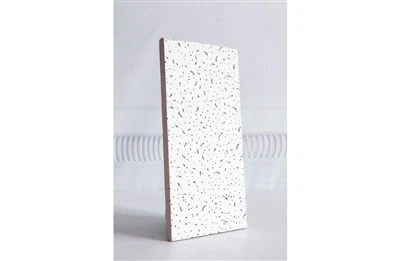
When it comes to creating comfortable and functional indoor spaces, sound insulation is a crucial factor. Whether it's an office, a classroom, a theater, or a residential building, effective sound insulation can significantly enhance the quality of the environment by reducing noise interference. In the search for high - performance sound - insulating materials, colored mineral fiber boards have emerged as a popular choice. As a supplier of colored mineral fiber boards, I'd like to delve into how these boards perform in terms of sound insulation.
Understanding the Basics of Sound Insulation
Before we explore the performance of colored mineral fiber boards, it's important to understand the basic principles of sound insulation. Sound is a mechanical wave that travels through a medium, such as air, by causing the molecules in the medium to vibrate. When sound waves encounter a barrier, such as a wall or a ceiling, part of the sound energy is reflected, part is absorbed, and part is transmitted through the barrier.
The effectiveness of a material in blocking sound is measured by its Sound Transmission Class (STC) rating. The STC rating is a single - number index that represents the ability of a material or a construction assembly to reduce airborne sound transmission. A higher STC rating indicates better sound - insulating performance. For example, a material with an STC rating of 50 will provide better sound insulation than a material with an STC rating of 30.
Composition and Structure of Colored Mineral Fiber Boards
Colored mineral fiber boards are typically made from inorganic mineral fibers, such as rock wool or slag wool. These fibers are derived from natural minerals or industrial by - products and are processed into a board - like structure. The manufacturing process involves mixing the mineral fibers with binders and other additives, followed by forming, pressing, and drying.


The unique structure of colored mineral fiber boards plays a key role in their sound - insulating performance. The fibers in the board create a complex network of pores and cavities. When sound waves enter the board, they are forced to travel through these tortuous paths. As the sound waves interact with the fibers and the air in the pores, the energy of the sound waves is gradually dissipated through friction and viscous losses. This process of sound absorption helps to reduce the amount of sound that is transmitted through the board.
Sound Absorption and Sound Transmission
One of the primary ways in which colored mineral fiber boards contribute to sound insulation is through sound absorption. Sound absorption refers to the ability of a material to convert sound energy into heat energy. Colored mineral fiber boards have excellent sound - absorbing properties due to their porous structure.
The porous nature of the boards allows sound waves to penetrate deep into the material. As the sound waves move through the pores, they cause the air molecules in the pores to vibrate. The friction between the air molecules and the fiber surfaces converts the sound energy into heat energy, which is then dissipated. This sound - absorbing mechanism helps to reduce the reverberation time in a room. Reverberation time is the time it takes for the sound level in a room to decay by 60 decibels after the sound source has stopped. A shorter reverberation time means that the sound in the room will die out more quickly, resulting in a clearer and more comfortable acoustic environment.
In addition to sound absorption, colored mineral fiber boards also provide some degree of sound transmission loss. Sound transmission loss refers to the reduction in sound level as sound passes through a material. The density and thickness of the colored mineral fiber board are important factors that affect its sound transmission loss. Generally, thicker and denser boards have better sound - insulating performance because they can block more sound energy.
Factors Affecting the Sound - Insulating Performance of Colored Mineral Fiber Boards
Several factors can influence the sound - insulating performance of colored mineral fiber boards.
Density
As mentioned earlier, the density of the board is an important factor. Higher - density boards tend to have better sound - insulating properties because they have more mass, which can block sound waves more effectively. However, increasing the density too much may also reduce the porosity of the board, which can negatively affect its sound - absorbing performance. Therefore, there is an optimal density range for colored mineral fiber boards to achieve a good balance between sound absorption and sound transmission loss.
Thickness
The thickness of the board also plays a significant role in sound insulation. Thicker boards generally provide better sound insulation because they offer a greater distance for sound waves to travel through, increasing the chances of sound energy being absorbed or dissipated. However, the relationship between thickness and sound - insulating performance is not linear. After a certain thickness, the improvement in sound insulation becomes less significant.
Installation Method
The way the colored mineral fiber boards are installed can also affect their sound - insulating performance. Proper installation is crucial to ensure that there are no gaps or air leaks around the boards. Gaps and air leaks can allow sound to bypass the board, reducing its effectiveness in blocking sound. For example, when installing the boards on a ceiling, it is important to use a proper mounting system and seal any joints or seams to prevent sound leakage.
Real - World Applications and Performance
Colored mineral fiber boards are widely used in various applications where sound insulation is required.
Commercial Buildings
In commercial buildings such as offices and conference rooms, colored mineral fiber boards can be installed on the ceilings to reduce noise from adjacent rooms and the outside environment. They can also help to improve the acoustic quality within the room by reducing reverberation. For example, a large open - plan office with a lot of background noise can benefit from the sound - absorbing properties of colored mineral fiber boards, creating a more comfortable and productive working environment.
Educational Institutions
In schools and universities, colored mineral fiber boards are commonly used in classrooms, lecture halls, and auditoriums. These spaces require good sound insulation to ensure that students can hear the teacher clearly and that noise from other parts of the building does not interfere with the learning process. The sound - absorbing properties of the boards can also help to reduce echo and improve the clarity of speech.
Residential Buildings
In residential buildings, colored mineral fiber boards can be used in bedrooms, living rooms, and home theaters. They can help to reduce noise from neighbors, traffic, and other external sources, providing a more peaceful and quiet living environment. For example, installing colored mineral fiber boards on the ceiling of a home theater can enhance the audio experience by reducing external noise and improving the sound quality within the room.
Product Range and Sound - Insulating Performance
At our company, we offer a variety of colored mineral fiber boards, each with its own unique features and sound - insulating performance.
The Square Fine Fissure Mineral Fiber Board has a fine - fissured surface that not only provides an aesthetically pleasing appearance but also contributes to its sound - absorbing performance. The fine fissures create additional surface area for sound waves to interact with, enhancing the sound - absorption effect.
The Tegular Pinhole Mineral Fiber Board features a tegular pattern with pinholes on the surface. The tegular pattern helps to break up sound waves, while the pinholes allow sound to penetrate deeper into the board, increasing the sound - absorption capacity.
Our Mineral Fiber Board is a versatile product that offers a good balance between sound insulation, durability, and cost - effectiveness. It is suitable for a wide range of applications and can be customized to meet specific sound - insulating requirements.
Conclusion and Call to Action
In conclusion, colored mineral fiber boards offer excellent sound - insulating performance due to their unique composition and structure. They can effectively absorb sound energy and reduce sound transmission, making them an ideal choice for various indoor applications. Whether you are looking to improve the acoustic quality of a commercial building, an educational institution, or a residential property, our colored mineral fiber boards can provide the solution you need.
If you are interested in learning more about our colored mineral fiber boards or would like to discuss your specific sound - insulation requirements, please feel free to contact us. We are committed to providing high - quality products and professional services to help you create the perfect indoor environment.
References
- Beranek, Leo L. "Acoustics." American Institute of Physics, 1986.
- Crocker, Malcolm J. "Handbook of Noise and Vibration Control." Wiley, 2007.
- Fahy, Frank J. "Sound and Structural Vibration: Radiation, Transmission and Response." Academic Press, 2007.