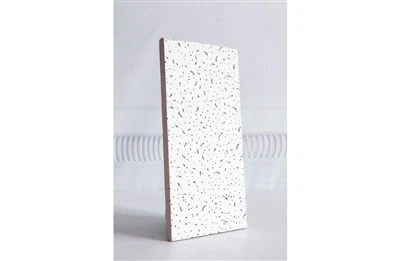
Hey there! As a supplier of pinhole mineral fiber board, I've seen firsthand how humidity can have a big impact on this product. In this blog post, I'm gonna share with you all the ways humidity affects pinhole mineral fiber board and what you can do to deal with it.


Understanding Pinhole Mineral Fiber Board
First off, let's quickly go over what pinhole mineral fiber board is. It's a type of building material that's commonly used for ceilings and walls. It's made from mineral fibers, usually from slag wool or rock wool, and it has these tiny pinholes on its surface. These pinholes give it some unique properties, like good sound absorption and a nice aesthetic look. You can check out more about Mineral Fiber Ceiling Tile on our website.
How Humidity Affects Pinhole Mineral Fiber Board
1. Moisture Absorption
One of the most obvious ways humidity affects pinhole mineral fiber board is through moisture absorption. When the air is humid, the board can absorb water vapor. This is because the pinholes act like little sponges, allowing the moisture to seep into the board. The more humid the environment, the more moisture the board will absorb.
Moisture absorption can lead to a few problems. For starters, it can make the board heavier. If you've installed the board on a ceiling, this extra weight can put stress on the installation system. Over time, it might even cause the board to sag or fall down.
Another issue is that the absorbed moisture can promote the growth of mold and mildew. Mold and mildew not only look bad but can also be a health hazard. They can cause respiratory problems, especially for people with allergies or asthma.
2. Dimensional Changes
Humidity can also cause the pinhole mineral fiber board to change its dimensions. When the board absorbs moisture, it expands. And when the air dries out and the board loses moisture, it contracts. These constant expansions and contractions can lead to cracks in the board.
Cracks in the board are not only unsightly but can also reduce its structural integrity. If the board is cracked, it might not be able to support its own weight or any additional loads. This can be a big problem, especially in commercial buildings where safety is a top priority.
3. Impact on Acoustic Properties
As I mentioned earlier, one of the benefits of pinhole mineral fiber board is its good sound absorption. However, humidity can affect this property. When the board absorbs moisture, the pinholes can get filled with water. This reduces the effectiveness of the sound absorption because the water in the pinholes changes the way sound waves interact with the board.
So, if you've installed the board in a room where good acoustics are important, like a recording studio or a conference room, high humidity can really mess things up. The room might become noisier, and the sound quality might be poor.
4. Surface Appearance
The surface appearance of the pinhole mineral fiber board can also be affected by humidity. When the board absorbs moisture, it can cause the surface to warp or bubble. This is especially true if the humidity levels are very high for an extended period.
A warped or bubbly surface is not going to look good. It can make the room look shabby and unprofessional. And if you're using the board for aesthetic purposes, this is definitely not what you want.
Dealing with Humidity and Pinhole Mineral Fiber Board
1. Control the Humidity
The best way to deal with the effects of humidity on pinhole mineral fiber board is to control the humidity in the environment. You can use a dehumidifier in areas where the humidity is high. A dehumidifier works by removing moisture from the air, keeping the humidity levels at a safe range.
In some cases, you might also need to use a humidifier if the air is too dry. This is because extremely dry air can also cause problems for the board, like excessive contraction and cracking.
2. Proper Installation
Proper installation is crucial when it comes to minimizing the effects of humidity on pinhole mineral fiber board. Make sure the installation system is strong enough to support the board, even if it absorbs some moisture and becomes heavier.
Also, leave some space around the edges of the board to allow for expansion and contraction. This can help prevent cracks from forming due to dimensional changes.
3. Regular Inspections
Regular inspections of the pinhole mineral fiber board are a good idea. Check for signs of moisture absorption, such as sagging, warping, or mold growth. If you notice any problems, take action immediately. You might need to replace the affected board or take steps to reduce the humidity in the area.
Our Products and Solutions
At our Mineral Fiber Ceiling Tiles/Board Factory, we offer high - quality pinhole mineral fiber boards. We've taken steps to make our boards more resistant to humidity. For example, we use special coatings that can reduce moisture absorption.
One of our popular products is the Tegular Sand Hole Mineral Fiber Board. It has a unique design that not only looks great but also performs well in different humidity conditions.
Contact Us for Purchase and Consultation
If you're interested in purchasing pinhole mineral fiber board or have any questions about how to deal with humidity and this product, don't hesitate to get in touch with us. We're here to help you find the best solutions for your project. Whether you're working on a small residential renovation or a large commercial building, we've got the products and expertise to meet your needs.
References
- Building Science Corporation. "Moisture and Mold in Buildings."
- National Institute of Standards and Technology. "Dimensional Stability of Building Materials."
- Environmental Protection Agency. "Mold Prevention Tips."