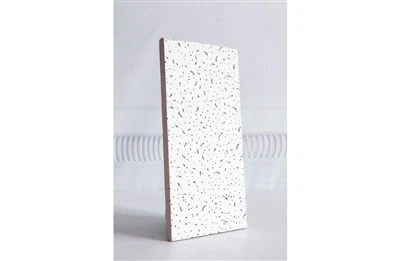
Hey there! As a supplier of mineral fiber boards, I often get asked about how these boards perform when it comes to sound insulation. Well, let's dive right into it and explore the ins and outs of mineral fiber boards in terms of keeping those unwanted noises at bay.
First off, what exactly is a mineral fiber board? Mineral fiber boards are made from a combination of mineral fibers, binders, and other additives. These fibers are typically derived from natural minerals like basalt or slag. The manufacturing process involves heating these minerals to high temperatures and then spinning them into fibers. These fibers are then formed into boards of various sizes and thicknesses.
So, how do these boards work their magic when it comes to sound insulation? The secret lies in their porous structure. Mineral fiber boards are full of tiny air pockets, which act as natural sound absorbers. When sound waves hit the board, they enter these air pockets and get trapped. As the sound waves bounce around inside the pockets, they lose energy and eventually get absorbed. This reduces the amount of sound that passes through the board, making it an effective sound insulation material.
One of the key factors that determine the sound insulation performance of a mineral fiber board is its density. Generally speaking, the higher the density of the board, the better its sound insulation properties. This is because a denser board has more fibers and fewer air spaces, which means there are more opportunities for the sound waves to be absorbed. However, it's important to note that density isn't the only factor. The thickness of the board, the type of fibers used, and the manufacturing process can also have an impact on its sound insulation performance.
Another important factor to consider is the frequency of the sound. Different materials are better at absorbing different frequencies of sound. Mineral fiber boards are particularly effective at absorbing mid - to high - frequency sounds. These are the types of sounds that we often encounter in our daily lives, such as voices, music, and the noise from electronic devices. For low - frequency sounds, like the rumble of traffic or the bass from a stereo, mineral fiber boards may not be as effective on their own. In these cases, they can be used in combination with other sound insulation materials to provide better overall sound control.
Now, let's take a look at some of the specific types of mineral fiber boards that we offer and how they perform in terms of sound insulation.
The Tegular Sand Hole Mineral Fiber Board is one of our popular products. Its unique sand - hole design not only gives it an aesthetically pleasing look but also enhances its sound absorption capabilities. The sand holes increase the surface area of the board, allowing more sound waves to be absorbed. This board is great for use in offices, classrooms, and other commercial spaces where noise reduction is important.
The Tegular Pinhole Mineral Fiber Board is another option. The pinhole design provides a similar effect to the sand - hole design, increasing the surface area for sound absorption. It's also relatively lightweight, making it easy to install. This board is suitable for both residential and commercial applications, such as apartments, hotels, and restaurants.
Our Mineral Fiber Wool Ceiling Tiles are specifically designed for ceiling applications. They offer excellent sound insulation properties and can help to create a more peaceful and quiet environment in a room. The wool - like texture of the tiles provides a large number of air pockets for sound absorption, and they can be easily installed on a suspended ceiling system.
In addition to their sound insulation properties, mineral fiber boards have several other advantages. They are fire - resistant, which makes them a safe choice for both residential and commercial buildings. They are also moisture - resistant, which means they won't warp or rot in humid conditions. And they are relatively easy to install, which can save time and money on installation costs.
However, like any material, mineral fiber boards also have some limitations. For example, they can be brittle and may break if not handled carefully during installation. And over time, they may accumulate dust and dirt, which can reduce their sound absorption performance. Regular cleaning and maintenance are necessary to keep them in good condition.
So, if you're looking for an effective sound insulation material for your next project, mineral fiber boards are definitely worth considering. Whether you're building a new office, renovating a home, or creating a recording studio, our range of mineral fiber boards can provide the sound control you need.


If you're interested in learning more about our mineral fiber boards or would like to discuss your specific sound insulation requirements, feel free to reach out. We're here to help you find the right solution for your project. We can provide you with samples, technical specifications, and pricing information to help you make an informed decision.
In conclusion, mineral fiber boards offer a great combination of sound insulation performance, fire resistance, and ease of installation. With our wide range of products, we're confident that we can meet your needs and help you create a quieter and more comfortable environment. So, don't hesitate to get in touch and start the conversation about your next project.
References
- Building Acoustics Handbook: A comprehensive guide to understanding the principles of sound insulation and the performance of different materials.
- Mineral Fiber Board Manufacturer's Technical Documentation: Provides detailed information about the specific properties and performance of our mineral fiber boards.