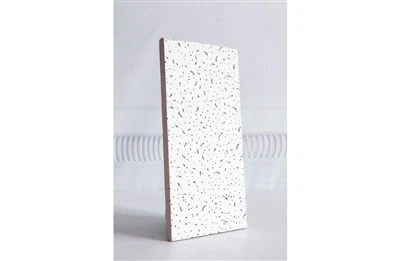
In the realm of acoustic solutions, choosing the right material can significantly impact the quality of sound insulation and absorption in various spaces. Two popular options that often come under consideration are sand acoustic mineral fiber board and cork acoustic board. As a supplier of sand acoustic mineral fiber board, I'm well - versed in the characteristics of both materials and eager to share a detailed comparison to help you make an informed decision.
Composition and Manufacturing
Let's start by looking at the composition of these two materials. Sand acoustic mineral fiber board, as the name suggests, is primarily made from mineral fibers. These fibers are typically derived from natural minerals such as basalt or slag. The manufacturing process involves melting these minerals at high temperatures and then spinning them into fine fibers. These fibers are then combined with binders and other additives to form a board. The addition of sand can enhance certain properties such as density and durability. You can learn more about the general concept of Mineral Fiber Board.
On the other hand, cork acoustic board is made from the bark of cork oak trees. The bark is harvested in a sustainable manner, usually every 9 - 12 years, without harming the tree. After harvesting, the cork is boiled, dried, and then compressed into boards. This natural and renewable source makes cork an environmentally friendly option.
Acoustic Performance
When it comes to acoustic performance, both materials have their strengths. Sand acoustic mineral fiber board is known for its excellent sound absorption capabilities. The porous structure of the mineral fibers allows sound waves to penetrate the board and be dissipated as heat energy. This makes it an ideal choice for spaces where noise reduction is a priority, such as recording studios, theaters, and open - plan offices. Our NOISE REDUCTION MINERAL FIBER CEILING BOARD is specifically designed to achieve high - level noise reduction.
Cork acoustic board also has good sound - absorbing properties. The cellular structure of cork contains millions of tiny air pockets, which act as natural sound absorbers. However, in comparison to sand acoustic mineral fiber board, cork may not provide the same level of sound absorption in extremely noisy environments. But for smaller spaces or areas with moderate noise levels, such as residential rooms or small meeting rooms, cork can be a sufficient option.
Fire Resistance
Fire safety is a crucial factor in building materials. Sand acoustic mineral fiber board has excellent fire - resistant properties. Mineral fibers are non - combustible, which means they do not contribute to the spread of fire. In fact, they can act as a barrier, preventing the fire from spreading quickly through a building. This makes it a preferred choice for commercial buildings, schools, and hospitals where fire safety regulations are strict.
Cork, while it is a natural material, is flammable. Although it has some degree of fire resistance due to its structure, it is not as fire - resistant as sand acoustic mineral fiber board. Special fire - retardant treatments can be applied to cork boards to improve their fire safety, but this adds to the cost and complexity.
Moisture Resistance
Moisture can have a significant impact on the performance and lifespan of acoustic boards. Sand acoustic mineral fiber board has relatively low moisture resistance. If exposed to high humidity or water, the board can absorb moisture, which may lead to swelling, warping, and a decrease in acoustic performance. However, there are moisture - resistant versions available that are treated with special coatings or additives to improve their resistance to moisture.
Cork, on the other hand, is naturally resistant to moisture. The waxy substance in cork, called suberin, makes it water - repellent. This makes cork acoustic board a good choice for areas with high humidity, such as bathrooms, kitchens, and basements.
Durability
In terms of durability, sand acoustic mineral fiber board is quite robust. It can withstand normal wear and tear in most indoor environments. However, it can be brittle and may break if subjected to heavy impacts. With proper installation and handling, it can last for many years. Our MINERAL FIBER TILES FACTORY produces high - quality boards that are designed for long - term use.
Cork acoustic board is also durable, but it is more flexible than sand acoustic mineral fiber board. It can withstand some degree of bending and compression without breaking. However, it may be more susceptible to damage from sharp objects or excessive abrasion.
Aesthetics and Installation
Sand acoustic mineral fiber board is available in a variety of colors and finishes, allowing for a wide range of design options. It can be easily cut and installed, making it suitable for both new construction and renovation projects. The smooth surface of the board can also be painted or decorated to match the interior design of a space.
Cork acoustic board has a unique and natural appearance that can add a warm and rustic touch to a room. It comes in different textures and patterns, which can enhance the aesthetic appeal of a space. Installation is relatively straightforward, but it may require special adhesives or fasteners due to its flexibility.
Cost
Cost is often a deciding factor in material selection. Sand acoustic mineral fiber board is generally more cost - effective than cork acoustic board. The raw materials for mineral fiber board are abundant and relatively inexpensive, and the manufacturing process is well - established, which helps keep the cost down. This makes it a popular choice for large - scale projects where budget is a concern.
Cork acoustic board, due to its natural and sustainable source, as well as the labor - intensive harvesting and manufacturing process, is more expensive. However, for those who value environmental friendliness and the unique aesthetic of cork, the higher cost may be justified.
Environmental Impact
As mentioned earlier, cork is a renewable and sustainable material. The harvesting of cork bark is a process that supports the local ecosystem and provides livelihoods for many communities. Additionally, cork production has a relatively low carbon footprint.
Sand acoustic mineral fiber board, while it is made from natural minerals, the manufacturing process requires a significant amount of energy. However, some manufacturers are taking steps to reduce their environmental impact by using recycled materials and energy - efficient production methods.
In conclusion, both sand acoustic mineral fiber board and cork acoustic board have their own advantages and disadvantages. If you are looking for high - performance sound absorption, excellent fire resistance, and cost - effectiveness, sand acoustic mineral fiber board is a great choice. On the other hand, if you prioritize environmental friendliness, moisture resistance, and a unique aesthetic, cork acoustic board may be more suitable for your needs.
If you are interested in learning more about our sand acoustic mineral fiber board or would like to discuss your specific acoustic requirements, please feel free to reach out. We are ready to assist you in finding the best acoustic solution for your project.


References
- "Building Acoustics: Principles and Practice" by Trevor Cox and Peter D'Antonio
- "Sustainable Building Materials: An Introduction" by Julian Allwood and Jonathan Cullen
- Industry reports on acoustic building materials from market research firms