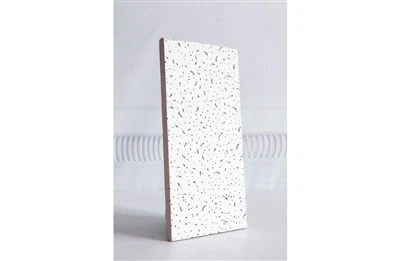
In the construction and interior design industries, the choice of building materials is crucial for achieving the desired functionality, aesthetics, and durability of a project. Among the various types of boards available, sand mineral fiber board has emerged as a popular option, offering unique properties and benefits. As a supplier of sand mineral fiber board, I am often asked how it compares to other types of boards. In this blog post, I will provide a detailed comparison of sand mineral fiber board with other common board materials, highlighting its advantages and disadvantages.
Composition and Manufacturing Process
Sand mineral fiber board is primarily made from a combination of sand, mineral fibers, and binders. The sand provides strength and stability, while the mineral fibers enhance its fire resistance, sound absorption, and insulation properties. The binders are used to hold the materials together and give the board its shape. The manufacturing process involves mixing the raw materials, forming them into a mat, and then subjecting the mat to high pressure and heat to cure and harden the board.

In contrast, other types of boards such as plywood, particleboard, and MDF (medium-density fiberboard) are made from wood fibers or particles. Plywood is made by gluing together thin layers of wood veneer, while particleboard is made by compressing wood particles with a synthetic resin binder. MDF is similar to particleboard but is made from finer wood fibers and has a higher density.
Physical Properties
Strength and Durability
Sand mineral fiber board has excellent strength and durability, making it suitable for a wide range of applications. It is resistant to warping, cracking, and moisture, which makes it ideal for use in high-humidity environments such as bathrooms and kitchens. In addition, sand mineral fiber board has a high impact resistance, which means it can withstand heavy use and abuse without damage.
Plywood is also known for its strength and durability, especially when it is made from high-quality wood veneers. However, it is more susceptible to moisture damage than sand mineral fiber board, which can cause it to warp and delaminate over time. Particleboard and MDF are generally less strong and durable than plywood and sand mineral fiber board, and they are more prone to damage from moisture and impact.
Fire Resistance
One of the key advantages of sand mineral fiber board is its excellent fire resistance. It is made from non-combustible materials, which means it does not contribute to the spread of fire. In addition, sand mineral fiber board has a high melting point, which means it can withstand high temperatures without melting or releasing toxic fumes. This makes it an ideal choice for use in fire-rated partitions, ceilings, and walls.
Plywood, particleboard, and MDF are all made from wood, which is a combustible material. While they can be treated with fire retardants to improve their fire resistance, they are still more flammable than sand mineral fiber board. In addition, when wood-based boards burn, they can release toxic fumes and smoke, which can be dangerous to human health.
Sound Absorption
Sand mineral fiber board has excellent sound absorption properties, which makes it ideal for use in acoustic applications such as recording studios, theaters, and conference rooms. The mineral fibers in the board help to absorb sound waves, reducing noise levels and improving the acoustics of the space.
Plywood, particleboard, and MDF are not as effective at absorbing sound as sand mineral fiber board. While they can be used in acoustic applications, they may require additional sound insulation materials to achieve the desired level of sound absorption.
Insulation
Sand mineral fiber board has good insulation properties, which makes it suitable for use in energy-efficient buildings. The mineral fibers in the board help to trap air, which reduces heat transfer and improves the thermal performance of the building. This can help to reduce energy costs and improve the comfort of the occupants.
Plywood, particleboard, and MDF have relatively low insulation properties compared to sand mineral fiber board. While they can be used in insulation applications, they may require additional insulation materials to achieve the desired level of thermal performance.
Aesthetics
Sand mineral fiber board is available in a variety of colors, textures, and finishes, which makes it suitable for a wide range of design applications. It can be painted, stained, or laminated to match the decor of the space. In addition, sand mineral fiber board has a smooth and uniform surface, which makes it easy to install and finish.
Plywood, particleboard, and MDF are also available in a variety of colors, textures, and finishes, but they may not be as versatile as sand mineral fiber board. Plywood has a visible grain pattern, which can add a natural and rustic look to the space, but it may not be suitable for all design styles. Particleboard and MDF have a smooth and uniform surface, but they may not be as durable or attractive as sand mineral fiber board.
Cost
The cost of sand mineral fiber board varies depending on the thickness, size, and quality of the board. Generally, sand mineral fiber board is more expensive than particleboard and MDF but less expensive than plywood. However, the cost of sand mineral fiber board may be offset by its long-term durability, fire resistance, sound absorption, and insulation properties.
Plywood is generally the most expensive of the four types of boards, especially when it is made from high-quality wood veneers. Particleboard and MDF are the least expensive, but they may not be as durable or suitable for all applications.
Environmental Impact
Sand mineral fiber board is made from natural and non-toxic materials, which makes it an environmentally friendly choice. It is also recyclable, which means it can be reused or repurposed at the end of its life cycle. In addition, sand mineral fiber board is produced using a low-energy manufacturing process, which reduces its carbon footprint.
Plywood, particleboard, and MDF are all made from wood, which is a renewable resource. However, the production of these boards requires a significant amount of energy and water, and they may contain synthetic resins and adhesives that can release harmful chemicals into the environment. In addition, the disposal of wood-based boards can contribute to deforestation and landfill waste.
Conclusion
In conclusion, sand mineral fiber board offers a number of advantages over other types of boards, including excellent strength and durability, fire resistance, sound absorption, insulation, aesthetics, and environmental impact. While it may be more expensive than some other types of boards, its long-term benefits make it a cost-effective choice for many applications.
If you are interested in learning more about sand mineral fiber board or would like to discuss your specific project requirements, please feel free to [contact us for procurement and negotiation]. We would be happy to provide you with more information and help you choose the right board for your needs.
References
- Building Materials Handbook, 5th Edition, McGraw-Hill Professional
- Fire Resistance of Building Materials and Structures, National Fire Protection Association
- Acoustics for Dummies, Wiley Publishing, Inc.
- Energy-Efficient Building Design, John Wiley & Sons, Inc.