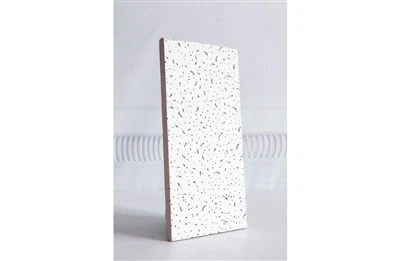
As a supplier of Square Pinhole Mineral Fiber Board, I've witnessed firsthand the growing interest in comparing different building materials. In this blog post, I'll delve into how Square Pinhole Mineral Fiber Board stacks up against wood fiber board, providing you with a comprehensive analysis to help you make an informed decision for your construction or renovation projects.
Composition and Manufacturing Process
Let's start by examining the composition and manufacturing processes of both materials. Wood fiber board, as the name suggests, is primarily made from wood fibers. These fibers are typically sourced from softwood or hardwood trees. The manufacturing process involves breaking down the wood into fibers, which are then combined with a binder, usually a synthetic resin, and compressed under high pressure and heat to form the board.
On the other hand, Square Pinhole Mineral Fiber Board is made from mineral fibers, such as rock wool or slag wool. These fibers are derived from natural minerals and are processed at high temperatures to create a fibrous material. The manufacturing process of Square Pinhole Mineral Fiber Board also involves adding binders and additives to enhance its properties, followed by forming and curing the board. The unique square pinhole structure is created during the manufacturing process, which gives the board its distinctive appearance and performance characteristics.
Physical Properties
Density and Weight
Wood fiber board generally has a lower density compared to Square Pinhole Mineral Fiber Board. This means that wood fiber board is lighter in weight, which can be an advantage in applications where weight is a concern, such as in some ceiling installations. However, the lower density also means that wood fiber board may be less rigid and more prone to damage compared to Square Pinhole Mineral Fiber Board.
Square Pinhole Mineral Fiber Board, with its higher density, offers greater strength and durability. It can withstand more stress and pressure without warping or breaking, making it suitable for applications where structural integrity is important.
Moisture Resistance
Moisture resistance is a crucial factor to consider, especially in areas with high humidity or where there is a risk of water exposure. Wood fiber board is highly susceptible to moisture damage. When exposed to water, the wood fibers can absorb moisture, causing the board to swell, warp, and eventually rot. This can lead to structural problems and a shorter lifespan for the board.
In contrast, Square Pinhole Mineral Fiber Board has excellent moisture resistance. The mineral fibers are inherently non - absorbent, and the board is often treated with water - repellent additives during the manufacturing process. This makes it suitable for use in bathrooms, kitchens, and other areas with high moisture levels.
Fire Resistance
Fire safety is a top priority in building construction. Wood fiber board is a combustible material. It can catch fire easily and contribute to the spread of flames in the event of a fire. This makes it less suitable for applications where fire resistance is required, such as in commercial buildings or public spaces.
Square Pinhole Mineral Fiber Board, on the other hand, is a non - combustible material. It has excellent fire - resistant properties and can help to contain fires, providing valuable time for evacuation and firefighting. This makes it a preferred choice for fire - rated partitions, ceilings, and other fire - safety applications.
Acoustic Performance
Sound Absorption
Both wood fiber board and Square Pinhole Mineral Fiber Board can be used for acoustic applications, but they have different sound - absorption characteristics. Wood fiber board has some sound - absorption capabilities due to the porous nature of the wood fibers. However, its performance may be limited, especially at higher frequencies.
Square Pinhole Mineral Fiber Board, with its unique square pinhole structure, offers superior sound absorption. The pinholes act as sound traps, allowing sound waves to enter and be dissipated within the board. This makes it highly effective in reducing noise levels in rooms, such as offices, classrooms, and auditoriums.
Sound Insulation
In addition to sound absorption, sound insulation is also important for creating a quiet and comfortable environment. Square Pinhole Mineral Fiber Board, with its higher density and better construction, provides better sound insulation compared to wood fiber board. It can block more sound from passing through the walls or ceilings, reducing the transmission of noise between rooms.
Environmental Impact
Sustainability
When it comes to sustainability, both materials have their pros and cons. Wood fiber board is made from a renewable resource - wood. However, the sourcing of wood can have a significant impact on the environment if not managed properly. Deforestation, habitat destruction, and the use of chemical pesticides and fertilizers in forestry can all have negative environmental consequences.
Square Pinhole Mineral Fiber Board is made from natural minerals, which are abundant and non - depletable. The manufacturing process of Square Pinhole Mineral Fiber Board also consumes less energy compared to some other building materials. Additionally, at the end of its life cycle, Square Pinhole Mineral Fiber Board can be recycled, reducing waste and its environmental footprint.


Indoor Air Quality
Indoor air quality is an important consideration for the health and well - being of building occupants. Wood fiber board may emit volatile organic compounds (VOCs) from the synthetic binders used in its manufacturing. These VOCs can cause respiratory problems, headaches, and other health issues, especially in poorly ventilated spaces.
Square Pinhole Mineral Fiber Board is generally low in VOC emissions. The mineral fibers are inert and do not release harmful chemicals into the air. This makes it a healthier choice for indoor applications, particularly in areas where people spend a lot of time, such as homes and offices.
Cost and Installation
Cost
The cost of wood fiber board and Square Pinhole Mineral Fiber Board can vary depending on several factors, such as the quality, thickness, and size of the boards. In general, wood fiber board is often less expensive than Square Pinhole Mineral Fiber Board. However, when considering the long - term costs, including maintenance, replacement, and energy efficiency, Square Pinhole Mineral Fiber Board may offer better value for money.
Installation
Wood fiber board is relatively easy to install, especially for DIY projects. It can be cut, drilled, and fastened using standard woodworking tools. However, due to its lower strength and durability, extra care may be needed during installation to avoid damage.
Square Pinhole Mineral Fiber Board may require more specialized tools and techniques for installation, especially for large - scale projects. However, its greater strength and durability mean that it can be installed more securely, reducing the risk of future problems.
Conclusion
In conclusion, Square Pinhole Mineral Fiber Board and wood fiber board have their own unique properties and applications. Wood fiber board may be a suitable choice for some low - cost and less demanding applications, where weight and ease of installation are the main considerations. However, when it comes to moisture resistance, fire safety, acoustic performance, environmental impact, and long - term durability, Square Pinhole Mineral Fiber Board clearly has the upper hand.
If you're in the market for a high - performance building material for your next project, I encourage you to consider Square Pinhole Mineral Fiber Board. You can learn more about our Mineral Fiber Ceiling Boards & Tiles, Mineral Fiber Board, and Square Sand Mineral Fiber Board on our website. We're here to provide you with the best products and solutions for your construction needs. If you have any questions or would like to discuss your project requirements, please don't hesitate to contact us for a procurement consultation.
References
- Building Materials Handbook, various editions
- Journal of Building and Construction Materials research papers on mineral fiber and wood fiber materials
- Industry reports on the performance and applications of different building boards