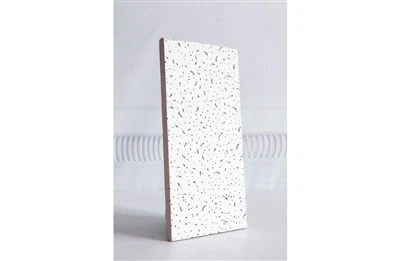
Hey there! As a supplier of pinhole mineral fiber boards, I'm super stoked to take you through the whole process of how these awesome boards are made. Pinhole mineral fiber boards are pretty cool products that have a wide range of applications, from acoustic insulation in buildings to decorative uses. So, let's dive right in!
Raw Materials
The first step in making pinhole mineral fiber boards is gathering the raw materials. The primary ingredient is mineral wool, which is made from natural minerals like basalt or diabase. These minerals are heated at extremely high temperatures, usually around 1400 - 1600 degrees Celsius. This intense heat melts the minerals, turning them into a molten state.
Once the minerals are molten, they are spun into fine fibers using a high - speed spinning process. This creates a mass of fluffy, white mineral wool that forms the base of our pinhole mineral fiber boards. Other additives are also mixed in at this stage. These can include binders, which help hold the fibers together, and various chemicals that enhance the board's properties like fire resistance, moisture resistance, and acoustic performance.
Forming the Board
After we've got our mineral wool and additives ready, it's time to form the board. The mineral wool is mixed with water to create a slurry. This slurry is then poured onto a moving conveyor belt that has a mesh screen at the bottom. As the water drains through the mesh, the mineral fibers start to form a mat on the belt.
This mat is then pressed between two rollers to remove any excess water and to compress the fibers together. The pressure applied during this process is carefully controlled to ensure that the board has the right density. A higher density board will be stronger and more rigid, while a lower density board might be better for acoustic applications.


Creating the Pinholes
Now, the "pinhole" part is what makes these boards unique. There are a few different ways to create the pinholes. One common method is to use a perforating machine. This machine has a series of small needles or pins that are pressed into the board while it's still in a semi - wet state. The pins create small holes in the surface of the board, giving it that distinctive pinhole appearance.
Another way is to use a chemical or thermal process. In some cases, special chemicals are applied to the board that react with the fibers in certain areas, causing them to break down and form holes. Thermal processes involve using heat to burn or melt small areas of the board, creating the pinholes.
Drying and Curing
Once the pinholes are created, the board needs to be dried and cured. The board is placed in a large oven or dryer where it's heated at a controlled temperature. This process removes any remaining moisture from the board and helps the binders set, making the board strong and stable.
The drying and curing process can take several hours, depending on the size and thickness of the board. During this time, we closely monitor the temperature and humidity inside the dryer to ensure that the board dries evenly and doesn't develop any cracks or warping.
Finishing and Quality Control
After the board is dried and cured, it's time for finishing touches. The edges of the board are trimmed to make them straight and smooth. We also sand the surface of the board to give it a nice, even finish.
Quality control is a crucial step in the manufacturing process. We check each board for defects, such as uneven pinholes, cracks, or inconsistent density. Boards that don't meet our strict quality standards are either reworked or discarded. Only the boards that pass our quality checks are sent out for packaging and distribution.
Types of Pinhole Mineral Fiber Boards
There are different types of pinhole mineral fiber boards available. For example, you can check out our Square Fine Fissure Mineral Fiber Board. These boards have fine, evenly spaced pinholes that give them a very smooth and elegant look. They are great for high - end interior applications where aesthetics are important.
Another type is the Square Sand Hole Mineral Fiber Board. These boards have larger, more irregular pinholes that give them a more rustic and natural appearance. They are often used in industrial or modern - style interiors.
In general, our Mineral Fiber Board, Mineral Wool Ceiling Tiles come in a variety of sizes, thicknesses, and colors to suit different customer needs.
Why Choose Our Pinhole Mineral Fiber Boards
Our pinhole mineral fiber boards have a lot of great features. First of all, they are excellent at absorbing sound. The pinholes and the porous structure of the board help to trap sound waves, reducing echo and noise in a room. This makes them perfect for use in auditoriums, offices, schools, and other places where good acoustics are important.
They are also fire - resistant. The mineral fibers used in the boards are naturally non - combustible, which means they can help prevent the spread of fire in a building. This is a crucial safety feature, especially in commercial and public buildings.
In addition, our boards are environmentally friendly. The raw materials used to make them are natural minerals, and the manufacturing process is designed to minimize waste and energy consumption.
Contact Us for Procurement
If you're interested in our pinhole mineral fiber boards and want to learn more or place an order, don't hesitate to reach out. We're always happy to answer your questions, provide samples, and discuss your specific requirements. Whether you're a contractor, an interior designer, or a building owner, we can work with you to find the perfect pinhole mineral fiber boards for your project.
References
- ASTM International. Standard test methods for evaluating the properties of mineral fiber insulation.
- National Fire Protection Association. Fire safety standards related to building materials.
- Building Research Establishment. Research on acoustic performance of mineral fiber products.