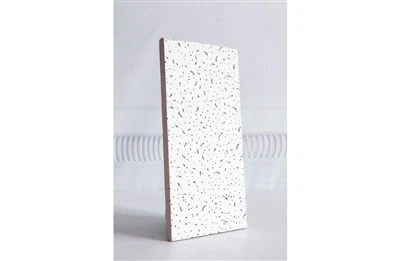
As a supplier of dune mineral fiber board, I often encounter inquiries from customers about its fire-resistant properties. This is a crucial concern, especially in construction and interior design, where fire safety is of utmost importance. In this blog, I will delve into the fire-resistant characteristics of dune mineral fiber board, providing a comprehensive understanding based on scientific knowledge and real-world applications.
What is Dune Mineral Fiber Board?
Dune mineral fiber board is a type of building material made from mineral fibers, which are typically derived from natural minerals such as basalt or slag. These fibers are processed and combined with binders to form a rigid board with various properties. It is widely used in ceiling systems, wall partitions, and other interior applications due to its excellent acoustic performance, thermal insulation, and aesthetic appeal.
There are different types of dune mineral fiber boards available in the market, each with its own unique features. For example, the Tegular Fine Fissure Mineral Fiber Board has a distinctive tegular edge and fine fissure pattern, which not only enhances its visual appeal but also contributes to better sound absorption. The Square Pinhole Mineral Fiber Board features a square pinhole design, providing a modern and stylish look while maintaining good acoustic properties. And the Dampproof Acoustic Mineral Fiber Ceiling Board is specifically designed to resist moisture, making it suitable for areas with high humidity, such as bathrooms and kitchens.
Fire-Resistant Mechanisms of Dune Mineral Fiber Board
The fire-resistant properties of dune mineral fiber board can be attributed to several factors. Firstly, the mineral fibers themselves are non-combustible. Mineral fibers have a high melting point, typically above 1000°C, which means they do not catch fire easily. When exposed to high temperatures, they can maintain their structural integrity for a certain period, preventing the spread of fire.
Secondly, the manufacturing process of dune mineral fiber board involves the use of special binders. These binders are formulated to have good fire-resistant properties. They can form a protective layer on the surface of the board when exposed to fire, which helps to slow down the heat transfer and reduce the release of flammable gases.
In addition, the structure of dune mineral fiber board also contributes to its fire resistance. The fibers are randomly oriented and intertwined, creating a porous structure. This porous structure can act as a heat insulator, reducing the rate at which heat is transferred through the board. It also provides a large surface area for heat dissipation, further enhancing the fire-resistant performance.
Fire-Resistant Ratings of Dune Mineral Fiber Board
To measure the fire-resistant performance of building materials, various standards and ratings have been established. In most countries, the fire-resistant rating of a material is determined by its ability to withstand fire for a certain period of time and its contribution to the spread of fire.
Dune mineral fiber board generally has a high fire-resistant rating. It is often classified as a Class A fire-resistant material according to the ASTM E84 standard, which is a widely recognized standard for measuring the surface burning characteristics of building materials. A Class A rating indicates that the material has a low flame spread index (less than 25) and a low smoke developed index (less than 450), which means it is highly resistant to fire and does not produce a large amount of smoke when exposed to fire.


In addition to the ASTM E84 standard, dune mineral fiber board may also meet other fire safety standards, such as the UL 723 standard in the United States and the BS 476 standard in the United Kingdom. These standards provide more detailed requirements and testing methods for evaluating the fire-resistant performance of building materials.
Real-World Applications and Case Studies
The high fire-resistant properties of dune mineral fiber board make it a popular choice for a wide range of applications where fire safety is a concern. For example, in commercial buildings such as offices, shopping malls, and hotels, dune mineral fiber board is often used for ceiling and wall applications. Its fire-resistant performance can help to prevent the spread of fire and provide valuable time for evacuation in case of a fire.
In educational institutions such as schools and universities, dune mineral fiber board is also widely used. It can help to create a safe learning environment by reducing the risk of fire and providing good acoustic performance, which is important for teaching and learning.
There are many real-world case studies that demonstrate the effectiveness of dune mineral fiber board in fire safety. For example, in a large shopping mall fire, the dune mineral fiber ceiling boards installed in the mall helped to contain the fire and prevent it from spreading to other areas for a significant period of time. This allowed the fire department to arrive on the scene in time and extinguish the fire, minimizing the damage and loss of life.
Conclusion
In conclusion, dune mineral fiber board is a highly fire-resistant building material. Its non-combustible mineral fibers, special binders, and porous structure all contribute to its excellent fire-resistant performance. It has a high fire-resistant rating according to various standards and has been proven to be effective in real-world applications.
If you are looking for a fire-resistant building material for your construction or interior design project, dune mineral fiber board is a great choice. It not only provides good fire safety but also offers other benefits such as acoustic performance, thermal insulation, and aesthetic appeal. We are a professional supplier of dune mineral fiber board, and we can provide you with high-quality products and professional services. If you are interested in our products, please feel free to contact us for more information and to discuss your procurement needs.
References
- ASTM E84 Standard Test Method for Surface Burning Characteristics of Building Materials
- UL 723 Standard for Test for Surface Burning Characteristics of Building Materials
- BS 476 Fire Tests on Building Materials and Structures