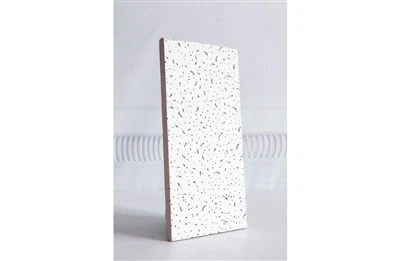
As a supplier of sand mineral fiber ceilings, I've had my fair share of questions from customers. One question that pops up quite often is whether sand mineral fiber ceilings are affected by temperature changes. Well, let's dive right into it.
First off, it's important to understand what sand mineral fiber ceilings are made of. These ceilings are crafted from a blend of sand, mineral fibers, and other additives. The combination gives them some unique properties, like good sound - absorption and fire - resistance. But how do they hold up when the temperature starts to fluctuate?
Impact of High Temperatures
When the temperature soars, sand mineral fiber ceilings can experience a few changes. One of the most common effects is expansion. Just like most materials, when heated, the molecules in the sand mineral fiber ceiling start to move more vigorously, causing the material to expand.
This expansion can be a bit of a headache if not accounted for. If the ceiling is installed without proper allowances for expansion, it can lead to warping or buckling. Imagine having a beautiful, smooth ceiling that starts to look all wavy because of the heat. Not a great look, right?
Another thing to consider is the potential for the ceiling to dry out at high temperatures. Excessive heat can cause the moisture within the material to evaporate. As the moisture leaves, the ceiling may become more brittle. This brittleness can increase the risk of cracks forming, especially if there's any vibration or movement in the building.
However, modern sand mineral fiber ceilings are often treated to withstand high - temperature conditions better. Many manufacturers, including us, use special additives and coatings that help to reduce the impact of heat. These treatments can slow down the expansion rate and prevent excessive drying, keeping the ceiling in good shape even when it's hot outside.
Effects of Low Temperatures
On the flip side, cold temperatures also have an impact on sand mineral fiber ceilings. When it gets really cold, the material contracts. Similar to expansion at high temperatures, if there's no room for contraction, it can lead to stress on the ceiling. This stress can cause the ceiling tiles to crack or even detach from the installation system.
Cold temperatures can also make the ceiling more prone to moisture - related issues. In cold environments, moisture in the air can condense on the cooler surface of the ceiling. If the ceiling isn't properly designed to handle this moisture, it can lead to mold growth and discoloration.
But don't worry too much. Our sand mineral fiber ceilings are engineered to handle these cold - weather challenges. We ensure that the materials used have a certain level of flexibility to accommodate contraction. And we also incorporate moisture - resistant features to prevent mold and mildew from taking hold.
Real - World Examples
I've seen firsthand how temperature changes can affect sand mineral fiber ceilings in different settings. For instance, in a large industrial warehouse where the temperature can vary greatly between day and night, we installed our sand mineral fiber ceilings. Initially, the customer was worried about how the ceiling would hold up. But thanks to our careful design and installation, the ceiling has remained in excellent condition. The expansion and contraction were managed well, and there were no signs of warping or cracking.
In a commercial office building located in a region with extremely cold winters, we installed our moisture - resistant sand mineral fiber ceilings. Despite the cold and the potential for condensation, the ceilings have shown no signs of mold or damage. This just goes to show that with the right product and installation, sand mineral fiber ceilings can handle temperature changes effectively.
Our Product Range
We offer a wide range of sand mineral fiber ceilings to meet different customer needs. Our Dampproof Acoustic Mineral Fiber Ceiling Board is a great option for areas where moisture and noise are concerns. It's not only resistant to dampness but also does an excellent job of absorbing sound, making it perfect for offices, classrooms, and recording studios.
If you're looking for a more traditional ceiling tile option, our Mineral Fiber Ceiling Tile is a top - choice. These tiles are easy to install and come in a variety of styles and colors to match any interior design.
And for a comprehensive ceiling solution, our Mineral Fiber Ceiling provides both aesthetic appeal and functionality. It combines the benefits of sound - absorption, fire - resistance, and temperature - tolerance in one package.

Conclusion
So, to answer the question "Is sand mineral fiber ceiling affected by temperature changes?", the answer is yes, but not in a way that should scare you off. With proper design, installation, and the right product selection, sand mineral fiber ceilings can withstand a wide range of temperature conditions.
If you're in the market for a sand mineral fiber ceiling, whether it's for a new construction project or a renovation, I encourage you to get in touch with us. We have the expertise and the product range to ensure that you get a ceiling that not only looks great but also performs well in different temperature environments. Let's start a conversation about your ceiling needs and find the perfect solution for you.
References
- Building Materials Handbook: A Guide to Understanding Material Properties.
- Research Papers on the Effects of Temperature on Mineral Fiber Products.