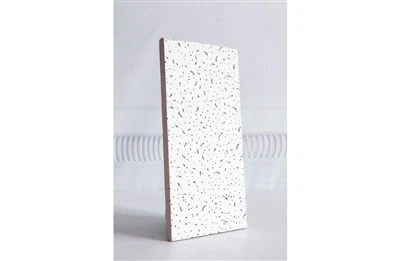
As a supplier of sand mineral fiber ceiling boards, one question that I often get asked is whether these ceiling boards are fire-resistant. It's a crucial query, especially considering the importance of fire safety in both residential and commercial buildings. In this blog post, I'll delve into the fire-resistant properties of sand mineral fiber ceiling boards, exploring the science behind them and their real-world applications.
Understanding Sand Mineral Fiber Ceiling Boards
Sand mineral fiber ceiling boards are made from a combination of sand, mineral fibers, and other additives. These materials are carefully selected and processed to create a ceiling board that offers a range of benefits, including excellent acoustic performance, good thermal insulation, and a smooth, attractive finish. But when it comes to fire safety, the key lies in the composition of the mineral fibers and the manufacturing process.
The mineral fibers used in these ceiling boards are typically inorganic, which means they do not burn. Inorganic materials have a high melting point and are resistant to the spread of fire. When exposed to high temperatures, they do not release flammable gases or contribute to the fuel load of a fire. Instead, they form a protective layer that helps to slow down the spread of flames and heat.


Fire-Resistant Mechanisms
The fire-resistant properties of sand mineral fiber ceiling boards can be attributed to several mechanisms. Firstly, the mineral fibers act as a barrier to heat transfer. When a fire breaks out, the ceiling board absorbs the heat and prevents it from passing through to the structure above. This helps to protect the building's structural integrity and gives occupants more time to evacuate safely.
Secondly, the composition of the ceiling board helps to reduce the spread of flames. The inorganic nature of the mineral fibers means that they do not support combustion. Instead, they char and form a protective layer that acts as a shield against the fire. This layer slows down the progress of the flames and reduces the risk of the fire spreading to other parts of the building.
Thirdly, sand mineral fiber ceiling boards have a low smoke emission rate. In a fire, smoke can be just as dangerous as the flames themselves. It can reduce visibility, make it difficult to breathe, and contain toxic gases. Sand mineral fiber ceiling boards are designed to produce minimal smoke when exposed to fire, which helps to improve the safety of the building's occupants.
Testing and Certification
To ensure the fire-resistant properties of sand mineral fiber ceiling boards, they undergo rigorous testing in accordance with international standards. These tests evaluate the board's performance in terms of fire resistance, smoke emission, and toxicity. Boards that meet the required standards are awarded certification, which provides assurance to architects, contractors, and building owners that the product is safe and reliable.
One of the most widely recognized standards for fire resistance is the ASTM E119 test, which measures the time that a building material can withstand fire exposure without losing its structural integrity or allowing the passage of flames and heat. Sand mineral fiber ceiling boards that pass this test are classified as having a certain fire rating, such as 1-hour, 2-hour, or 3-hour fire resistance.
Real-World Applications
Sand mineral fiber ceiling boards are used in a wide range of applications where fire safety is a concern. In commercial buildings, such as offices, hospitals, and schools, they are often used in corridors, stairwells, and other areas where the spread of fire could have serious consequences. In residential buildings, they are commonly used in kitchens, basements, and other areas where the risk of fire is higher.
In addition to their fire-resistant properties, sand mineral fiber ceiling boards also offer other benefits that make them a popular choice for these applications. They are easy to install, lightweight, and cost-effective. They also have good acoustic performance, which helps to reduce noise levels in the building.
Comparison with Other Ceiling Materials
When it comes to fire safety, sand mineral fiber ceiling boards have several advantages over other ceiling materials. For example, compared to gypsum board, sand mineral fiber ceiling boards have a higher fire rating and produce less smoke. Gypsum board is made from a combination of gypsum and paper, which can burn and release toxic gases when exposed to fire.
Compared to wooden ceiling boards, sand mineral fiber ceiling boards are non-combustible and do not contribute to the fuel load of a fire. Wood is a natural material that burns easily and can spread fire quickly. Sand mineral fiber ceiling boards provide a safer alternative for buildings where fire safety is a priority.
Conclusion
In conclusion, sand mineral fiber ceiling boards are indeed fire-resistant. Their inorganic composition, combined with their unique manufacturing process, gives them excellent fire-resistant properties. They act as a barrier to heat transfer, reduce the spread of flames, and have a low smoke emission rate. These properties make them a popular choice for a wide range of applications where fire safety is a concern.
If you're considering using sand mineral fiber ceiling boards in your next project, I encourage you to learn more about our products. We offer a variety of Mineral Wool Board, Mineral Fiber Board, and Tegular Pinhole Mineral Fiber Board options to meet your specific needs. Our products are tested and certified to ensure their quality and performance.
If you have any questions or would like to discuss your project in more detail, please feel free to contact us. We're here to help you make the right choice for your fire safety needs.
References
- ASTM International. (2019). Standard Test Methods for Fire Tests of Building Construction and Materials (ASTM E119).
- National Fire Protection Association. (2018). National Fire Codes.