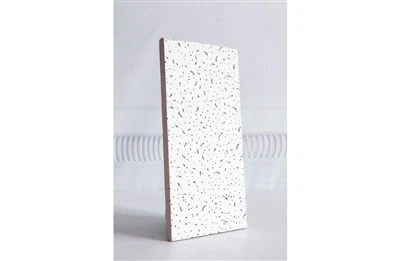
Hey there! As a supplier of sand hole mineral fiber boards, I often get asked about the best adhesives to use with these boards. So, I thought I'd share some insights on this topic.
First off, let's talk a bit about sand hole mineral fiber boards. These boards are known for their unique structure with sand holes, which gives them certain properties like good sound - absorption and insulation. They're used in a variety of applications, from ceiling installations to wall partitions. You can check out our Mineral Fiber Board and Mineral Fiber Board, Mineral Wool Ceiling Tiles for more details on the products. And if you're looking for a dampproof option, our Dampproof Acoustic Mineral Fiber Ceiling Board is a great choice.
Now, when it comes to adhesives for sand hole mineral fiber boards, there are a few factors to consider. The adhesive needs to have good bonding strength, be compatible with the board material, and be suitable for the specific application environment.
PVA Adhesives
Polyvinyl acetate (PVA) adhesives are a popular choice. They're relatively easy to use and have a decent bonding strength. PVA adhesives are water - based, which means they're non - toxic and have low odor. This makes them a great option for indoor applications where air quality is a concern.
One of the advantages of PVA adhesives is that they dry clear, which is important if you don't want the adhesive to be visible on the surface of the sand hole mineral fiber board. They also have a good open time, which gives you enough time to position the board properly before the adhesive sets.
However, PVA adhesives may not be the best choice for high - humidity environments. They can lose some of their bonding strength when exposed to moisture over a long period. So, if you're using the sand hole mineral fiber boards in a bathroom or a basement, you might want to consider other options.
Epoxy Adhesives
Epoxy adhesives are known for their high - strength bonding. They consist of two parts: a resin and a hardener. When these two parts are mixed together, a chemical reaction occurs, resulting in a very strong bond.
Epoxy adhesives can withstand high temperatures, chemicals, and moisture. This makes them suitable for a wide range of applications, including those in harsh environments. They're also resistant to impact and vibration, which is important if the sand hole mineral fiber boards will be subject to some movement.
But there are some downsides to using epoxy adhesives. They can be more difficult to work with compared to PVA adhesives. The mixing process needs to be precise, and they have a relatively short open time. Once the epoxy starts to set, it becomes very hard to reposition the board. Also, epoxy adhesives can be more expensive than other types of adhesives.
Construction Adhesives
Construction adhesives are specifically designed for building and construction applications. They come in different formulations, such as solvent - based and water - based.
Solvent - based construction adhesives offer strong bonding and are suitable for heavy - duty applications. They can bond sand hole mineral fiber boards to a variety of substrates, including wood, metal, and concrete. However, they have a strong odor and contain volatile organic compounds (VOCs), which can be harmful to the environment and human health. So, proper ventilation is required when using them.


Water - based construction adhesives are a more environmentally friendly option. They have lower VOC emissions and a milder odor. They also offer good bonding strength and are easy to clean up with water.
One of the benefits of construction adhesives is that they can fill small gaps and irregularities between the board and the substrate. This helps to ensure a more secure and even bond. But like epoxy adhesives, they can have a relatively short open time, so you need to work quickly.
Contact Adhesives
Contact adhesives are another option for bonding sand hole mineral fiber boards. They work by applying the adhesive to both the board and the substrate and allowing it to dry to a tacky state. Then, the two surfaces are pressed together, creating an instant bond.
Contact adhesives offer strong bonding and are suitable for bonding large areas. They're also resistant to heat and moisture. However, they can be a bit tricky to use. If the surfaces are not properly aligned when they are pressed together, it can be very difficult to reposition them.
Silicone Adhesives
Silicone adhesives are flexible and can withstand movement and vibration. They're also resistant to moisture, UV light, and temperature changes. This makes them suitable for outdoor applications or areas where the sand hole mineral fiber boards may be exposed to the elements.
Silicone adhesives are easy to apply and can be used on a variety of surfaces. They create a waterproof seal, which is important if the boards will be in contact with water. However, they may not have the same high - strength bonding as some of the other adhesives mentioned above.
Choosing the Right Adhesive
So, how do you choose the right adhesive for your sand hole mineral fiber boards? Here are some tips:
- Consider the Application Environment: If it's an indoor, low - humidity area, PVA adhesives or water - based construction adhesives might be a good choice. For outdoor or high - humidity areas, epoxy or silicone adhesives could be more suitable.
- Think about the Substrate: Different adhesives bond better to different substrates. For example, if you're bonding the sand hole mineral fiber board to wood, PVA adhesives or construction adhesives may work well. If it's a metal substrate, epoxy adhesives might be a better option.
- Evaluate the Bonding Strength Required: For light - duty applications, PVA adhesives may be sufficient. But for heavy - duty applications, you'll need a stronger adhesive like epoxy or a solvent - based construction adhesive.
- Factor in the Ease of Use: If you're a DIYer or have limited experience with adhesives, you might want to choose an adhesive that's easy to apply and has a longer open time, like PVA adhesives.
In conclusion, there are several adhesives that are suitable for sand hole mineral fiber boards, each with its own advantages and disadvantages. By considering the factors mentioned above, you can choose the adhesive that best meets your needs.
If you're interested in purchasing our sand hole mineral fiber boards or have any questions about the adhesives, feel free to reach out to us for a procurement discussion. We're here to help you make the right choices for your project.
References
- "Adhesive Technology Handbook", Third Edition, by John A. Dorsey
- "Handbook of Adhesives and Sealants", Second Edition, by John W. Sutherland