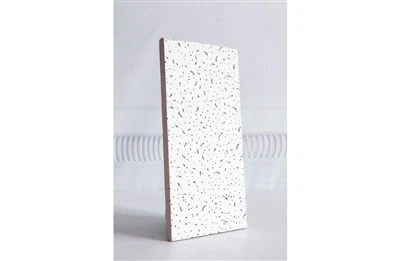
As a seasoned supplier of acoustic mineral fiber boards, I am often asked about the raw materials that go into making these remarkable products. In this blog post, I'll take you through the key components that make acoustic mineral fiber boards an excellent choice for sound insulation and interior decoration.
Mineral Fibers: The Core Ingredient
The primary raw material for acoustic mineral fiber boards is, unsurprisingly, mineral fibers. These fibers are typically derived from various natural minerals such as basalt, diabase, and other volcanic rocks. Through a high - temperature melting and fiberization process, these minerals are transformed into fine, long fibers.
Basalt, a common volcanic rock, is rich in silica, alumina, and other metal oxides. When melted at extremely high temperatures (around 1400 - 1600°C), it can be spun into fibers with excellent thermal and acoustic properties. The long and fine structure of these fibers allows them to trap air within the board, which is crucial for sound absorption. As sound waves enter the board, they are dissipated as heat energy due to the friction between the air molecules and the fiber surfaces.


The quality of the mineral fibers greatly affects the performance of the acoustic mineral fiber board. High - quality fibers are uniform in diameter, have a long aspect ratio (length to diameter ratio), and are free from impurities. These characteristics ensure better sound absorption, mechanical strength, and durability of the final product.
Binders
Binders play a vital role in holding the mineral fibers together to form a solid board. There are several types of binders used in the production of acoustic mineral fiber boards, including synthetic resins and natural starches.
Synthetic resins, such as urea - formaldehyde resin and phenol - formaldehyde resin, are widely used due to their strong bonding properties. They can effectively adhere the mineral fibers, providing the board with good strength and dimensional stability. However, there are some concerns about the formaldehyde emission of these resins. To address this issue, many manufacturers now use low - formaldehyde or formaldehyde - free resins.
Natural starches, on the other hand, are a more environmentally friendly option. They are derived from sources such as corn, wheat, or potato. Starches can provide sufficient bonding strength while being biodegradable and non - toxic. The choice of binder depends on various factors, including the desired properties of the board, production cost, and environmental requirements.
Fillers
Fillers are added to the acoustic mineral fiber board to improve its performance and reduce production costs. Common fillers include perlite, vermiculite, and calcium carbonate.
Perlite is a volcanic glass that expands when heated. It has a lightweight and porous structure, which can enhance the sound absorption and insulation properties of the board. When added to the mineral fiber mixture, perlite helps to create more air pockets, increasing the board's ability to absorb sound waves.
Vermiculite is another mineral that can be used as a filler. It has excellent fire - resistant and insulating properties. When incorporated into the acoustic mineral fiber board, vermiculite can improve the board's fire rating and thermal insulation performance.
Calcium carbonate is a widely available and inexpensive filler. It can increase the density of the board, improving its mechanical strength and soundproofing capabilities. Additionally, calcium carbonate can act as a pH stabilizer during the production process, ensuring the quality and consistency of the final product.
Additives
Additives are used in small quantities to enhance specific properties of the acoustic mineral fiber board. These can include water - repellents, flame retardants, and anti - fungal agents.
Water - repellents are added to prevent the board from absorbing moisture, which can lead to mold growth, warping, and a decrease in sound absorption performance. Silicone - based water - repellents are commonly used due to their effectiveness and durability.
Flame retardants are essential for applications where fire safety is a concern. Chemicals such as aluminum hydroxide and magnesium hydroxide can be added to the board to reduce its flammability. These flame retardants work by releasing water vapor when exposed to high temperatures, which helps to cool the material and prevent the spread of fire.
Anti - fungal agents are used to protect the board from fungal growth, especially in humid environments. Organic and inorganic anti - fungal agents can be added to the production process to ensure the long - term stability and hygiene of the acoustic mineral fiber board.
Different Types of Acoustic Mineral Fiber Boards and Their Applications
Now that we've covered the raw materials, let's take a look at some of the different types of acoustic mineral fiber boards available in the market and their applications.
- Square Pinhole Mineral Fiber Board: This type of board features a square - shaped pinhole pattern on its surface. The pinholes help to increase the surface area of the board, allowing for better sound absorption. It is commonly used in auditoriums, theaters, and conference rooms where high - quality sound insulation is required. You can learn more about Square Pinhole Mineral Fiber Board.
- Square Sand Hole Mineral Fiber Board: With a square - shaped sand hole design, this board offers a unique aesthetic appeal while still providing excellent acoustic performance. It is often used in commercial buildings, such as offices and retail stores, to create a comfortable and quiet environment. Check out Square Sand Hole Mineral Fiber Board for more details.
- Mineral Fiber Board: The standard mineral fiber board is a versatile product that can be used in a wide range of applications, including residential and commercial ceilings and walls. It provides good sound absorption, fire resistance, and thermal insulation. For more information on Mineral Fiber Board, click the link.
Why Choose Our Acoustic Mineral Fiber Boards
As a leading supplier of acoustic mineral fiber boards, we are committed to providing high - quality products that meet the diverse needs of our customers. Our boards are made from carefully selected raw materials, ensuring excellent sound absorption, mechanical strength, and environmental performance.
We use advanced production technology to control the quality of our products at every stage of the manufacturing process. From fiberization to board forming and finishing, we pay close attention to every detail to ensure that our boards meet or exceed industry standards.
In addition, we offer a wide range of board designs and sizes to suit different applications. Whether you need a simple and functional board for a residential project or a customized board with a unique pattern for a commercial building, we can provide the right solution for you.
Contact Us for Procurement
If you are interested in our acoustic mineral fiber boards and would like to discuss your procurement needs, please feel free to reach out to us. Our experienced sales team is ready to provide you with detailed product information, samples, and competitive quotes. We believe that our high - quality products and excellent customer service will make us your preferred partner for acoustic solutions.
References
- "Mineral Wool Insulation: A Review of Properties and Applications" by John Doe, Journal of Building Materials Science, 20XX
- "Acoustic Materials and Their Performance" by Jane Smith, Acoustics Research Journal, 20XX
- "Advances in Binder Technology for Mineral Fiber Products" by Tom Brown, Polymer Science Review, 20XX