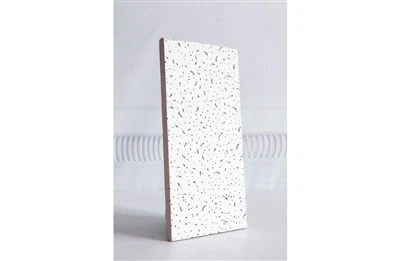
As a supplier of sand hole mineral fiber boards, I've encountered numerous inquiries from customers regarding the presence of sand holes in these boards. Sand holes can significantly affect the appearance and performance of the boards, making it crucial to understand their causes. In this blog post, I'll delve into the various factors that can lead to sand holes in sand hole mineral fiber boards.
Raw Material Quality
The quality of raw materials used in the production of sand hole mineral fiber boards plays a pivotal role in determining the occurrence of sand holes. Low - quality mineral fibers may contain impurities or inconsistent fiber lengths. Impurities can prevent proper bonding between the fibers during the manufacturing process. For example, if there are small particles of foreign matter in the mineral fiber, they can create gaps or voids that manifest as sand holes on the board's surface.
In addition, inconsistent fiber lengths can lead to uneven distribution of fibers in the board. Longer fibers may clump together, while shorter fibers may not be able to fill the spaces effectively. This uneven distribution can result in areas with lower fiber density, which are more prone to developing sand holes. When sourcing raw materials, it is essential to work with reliable suppliers who can provide high - quality mineral fibers with consistent specifications.
Manufacturing Process
Mixing
The mixing process is a critical step in the production of sand hole mineral fiber boards. If the fibers, binders, and other additives are not mixed thoroughly, it can lead to an uneven distribution of components in the board. For instance, if the binder is not evenly dispersed among the fibers, there will be areas where the bonding is weak. These weak - bonded areas are more likely to form sand holes as the board dries and cures.
To ensure proper mixing, manufacturers need to use appropriate mixing equipment and follow strict mixing protocols. The mixing time, speed, and order of adding ingredients should be carefully controlled to achieve a homogeneous mixture.
Forming
During the forming process, the mixture of mineral fibers and binders is shaped into boards. If the forming pressure is not uniform across the board, it can cause variations in density. Areas with lower pressure will have a lower fiber density, increasing the likelihood of sand holes.
Moreover, the forming equipment should be well - maintained to ensure smooth operation. Any irregularities or damages in the forming molds can transfer to the boards, resulting in surface defects such as sand holes.
Drying and Curing
The drying and curing process is also crucial in preventing sand holes. If the board dries too quickly, it can cause internal stresses and cracking, which may manifest as sand holes on the surface. On the other hand, if the drying is too slow, it can lead to the growth of mold or other microorganisms, which can also damage the board's structure and create sand holes.
The temperature and humidity during the drying and curing process need to be carefully controlled. Manufacturers should use drying chambers with precise temperature and humidity control systems to ensure a consistent and proper drying and curing environment.
Environmental Factors
Humidity
High humidity during the manufacturing or storage of sand hole mineral fiber boards can have a negative impact on their quality. When the boards are exposed to high humidity, the moisture can be absorbed by the fibers and binders. This can cause the binders to lose their effectiveness, leading to weak bonding between the fibers. As a result, sand holes may form on the board's surface.
To mitigate the effects of humidity, manufacturers should store the boards in a controlled environment with low humidity levels. Additionally, proper packaging can help protect the boards from moisture during transportation and storage.
Temperature
Extreme temperatures can also affect the quality of sand hole mineral fiber boards. High temperatures during the drying process can cause the binders to break down prematurely, weakening the bonding between the fibers. Low temperatures, on the other hand, can slow down the curing process, leading to incomplete bonding and an increased risk of sand holes.
Manufacturers need to ensure that the temperature is within the optimal range throughout the manufacturing process. This may require the use of heating or cooling systems in the production facilities.
Handling and Storage
Handling
Improper handling of sand hole mineral fiber boards can cause physical damage that may result in sand holes. For example, if the boards are dropped or bumped during transportation or installation, it can cause the fibers to separate from the binder in some areas, creating sand holes.
Workers should be trained on proper handling techniques to minimize the risk of damage. This includes using appropriate lifting equipment and avoiding rough handling of the boards.
Storage
If the boards are stored in an improper manner, it can also lead to the formation of sand holes. Storing the boards on uneven surfaces can cause pressure points, which may result in local deformation and the development of sand holes. Additionally, stacking the boards too high can put excessive pressure on the lower boards, causing damage.

It is recommended to store the boards on flat, stable surfaces and limit the stacking height to prevent damage.
Impact on Product Performance
Sand holes in sand hole mineral fiber boards not only affect the aesthetic appearance but also the performance of the boards. In terms of acoustic performance, sand holes can disrupt the sound - absorbing properties of the boards. Sound waves may pass through the sand holes instead of being absorbed by the fibers, reducing the overall acoustic effectiveness of the board.
In terms of moisture resistance, sand holes can provide pathways for moisture to penetrate the board. This can lead to the growth of mold and mildew, which not only damages the board but also poses a health risk to the occupants of the building.
Solutions and Recommendations
To address the issue of sand holes in sand hole mineral fiber boards, manufacturers should implement strict quality control measures at every stage of the production process. This includes inspecting the raw materials, monitoring the manufacturing process parameters, and conducting thorough quality checks on the finished boards.
For customers, it is important to choose high - quality sand hole mineral fiber boards from reputable suppliers. When purchasing, they can ask for product samples to check for the presence of sand holes and other surface defects.
We offer a wide range of high - quality sand hole mineral fiber boards, including Dampproof Acoustic Mineral Fiber Ceiling Board, Square Colors Mineral Fiber Board, and Mineral Fiber Wool Ceiling Tiles. Our products are manufactured using advanced technology and strict quality control measures to minimize the occurrence of sand holes.
If you are interested in our products or have any questions about sand hole mineral fiber boards, please feel free to contact us for procurement and negotiation. We are committed to providing you with the best products and services.
References
- ASTM International. (20XX). Standard test methods for physical and mechanical properties of mineral fiber insulation.
- Manufacturing Handbook of Building Materials. (20XX). A comprehensive guide to the production of building materials including mineral fiber boards.
- Journal of Building Materials Research. (20XX). Research on the quality control of mineral fiber boards and the prevention of surface defects.