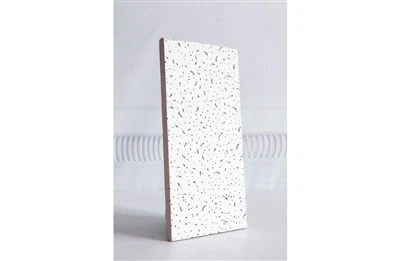
Sand acoustic mineral fiber boards have gained significant popularity in the construction and interior design industries due to their excellent acoustic properties, fire resistance, and aesthetic appeal. As a leading supplier of sand acoustic mineral fiber boards, I often receive inquiries about the density of these boards. In this blog post, I will delve into the concept of density, its importance in sand acoustic mineral fiber boards, and how it affects the performance and applications of these products.
Understanding Density
Density is a fundamental physical property that measures the mass of a substance per unit volume. In the context of sand acoustic mineral fiber boards, density refers to the amount of material packed into a given volume of the board. It is typically expressed in kilograms per cubic meter (kg/m³) or pounds per cubic foot (lb/ft³).
The density of a sand acoustic mineral fiber board is determined by several factors, including the type and quality of the raw materials used, the manufacturing process, and the desired properties of the final product. Generally, higher density boards are made with more compacted fibers and may contain additional additives or binders to increase their strength and durability.
Importance of Density in Sand Acoustic Mineral Fiber Boards
The density of a sand acoustic mineral fiber board plays a crucial role in determining its performance and suitability for different applications. Here are some key aspects where density has a significant impact:
Acoustic Performance
One of the primary reasons for using sand acoustic mineral fiber boards is their ability to absorb sound and reduce noise levels in a space. The density of the board affects its sound absorption coefficient, which is a measure of how effectively the board can absorb sound waves.
Higher density boards generally have better sound absorption properties because they have more mass and can absorb more energy from sound waves. This makes them ideal for applications where noise reduction is a priority, such as recording studios, theaters, classrooms, and offices.
On the other hand, lower density boards may be more suitable for applications where a balance between sound absorption and cost is required. They can still provide adequate sound absorption in less demanding environments, such as residential spaces or light commercial areas.
Structural Strength
The density of a sand acoustic mineral fiber board also influences its structural strength and durability. Higher density boards are typically more rigid and less prone to damage or deformation. They can withstand greater loads and are better able to maintain their shape over time.
This makes higher density boards a preferred choice for applications where the board needs to support its own weight or additional loads, such as ceiling installations or partitions. They are also more resistant to impact and can better withstand wear and tear in high-traffic areas.
Fire Resistance
Sand acoustic mineral fiber boards are known for their excellent fire resistance properties. The density of the board can affect its fire performance by influencing the amount of combustible material present and the rate at which it burns.
Higher density boards generally have better fire resistance because they contain less air space and are more difficult to ignite. They can also provide a greater barrier to the spread of fire and smoke, helping to protect the occupants of a building in the event of a fire.
Aesthetic Appeal
In addition to their functional properties, sand acoustic mineral fiber boards can also enhance the aesthetic appeal of a space. The density of the board can affect its surface texture and appearance, which can be important considerations in interior design.
Higher density boards often have a smoother and more uniform surface finish, which can give a more refined and professional look to a room. They may also be available in a wider range of colors and patterns, allowing for greater design flexibility.
Typical Density Ranges for Sand Acoustic Mineral Fiber Boards
The density of sand acoustic mineral fiber boards can vary depending on the specific product and its intended application. However, most commercial sand acoustic mineral fiber boards fall within the following density ranges:
- Low Density: Boards with a density of less than 200 kg/m³ (12.5 lb/ft³) are considered low density. These boards are lightweight and have good sound absorption properties, but they may have lower structural strength and fire resistance.
- Medium Density: Boards with a density between 200 kg/m³ (12.5 lb/ft³) and 400 kg/m³ (25 lb/ft³) are considered medium density. They offer a good balance between sound absorption, structural strength, and fire resistance, making them suitable for a wide range of applications.
- High Density: Boards with a density greater than 400 kg/m³ (25 lb/ft³) are considered high density. These boards have excellent sound absorption, structural strength, and fire resistance properties, but they may be heavier and more expensive.
Choosing the Right Density for Your Application
When selecting a sand acoustic mineral fiber board for your project, it is important to consider the specific requirements of your application and choose a board with the appropriate density. Here are some factors to consider:
Acoustic Requirements
If noise reduction is your primary concern, you should choose a board with a higher density to ensure better sound absorption. Consider the noise levels in the space and the desired level of sound reduction when selecting the board.
Structural Requirements
If the board needs to support its own weight or additional loads, such as in ceiling installations or partitions, you should choose a board with a higher density to ensure adequate structural strength. Consider the span of the board, the type of support system, and the expected loads when selecting the board.
Fire Requirements
If fire resistance is a requirement for your application, you should choose a board with a higher density to ensure better fire performance. Check the fire rating of the board and ensure that it meets the relevant safety standards for your project.


Cost Considerations
The density of the board can also affect its cost. Higher density boards are generally more expensive than lower density boards. Consider your budget and the cost-benefit ratio when selecting the board.
Our Product Range
As a supplier of sand acoustic mineral fiber boards, we offer a wide range of products with different densities to meet the diverse needs of our customers. Our product range includes:
- Tegular Sand Mineral Fiber Board: This board features a tegular edge design, which provides a unique and decorative look. It is available in different densities and is suitable for a variety of ceiling applications.
- Embossed PVC Film For Gypsum Tile: This product combines the acoustic properties of sand acoustic mineral fiber boards with the aesthetic appeal of embossed PVC film. It is available in different patterns and colors and is suitable for both residential and commercial applications.
- Mineral Fiber Ceiling Tile: Our mineral fiber ceiling tiles are available in different densities and designs to meet the specific requirements of your project. They are easy to install and provide excellent sound absorption and fire resistance properties.
Contact Us for Procurement and Consultation
If you are interested in purchasing sand acoustic mineral fiber boards or need more information about our products, please feel free to contact us. Our team of experts is available to provide you with professional advice and guidance on selecting the right product for your application. We can also offer competitive pricing and flexible delivery options to meet your needs.
Whether you are an architect, contractor, interior designer, or building owner, we are committed to providing you with high-quality sand acoustic mineral fiber boards and exceptional customer service. Contact us today to start your procurement process and take the first step towards creating a more comfortable and acoustically optimized space.
References
- ASTM International. (2021). Standard Specification for Mineral Fiber Ceiling Tiles. ASTM C1264-21.
- ISO 11654:1997. Acoustics - Materials for acoustical applications - Rating of sound absorption.
- National Fire Protection Association. (2021). NFPA 220: Standard on Types of Building Construction.