Hey there! As a supplier of colored mineral fiber boards, I often get asked about the differences between colored mineral fiber boards and normal mineral fiber boards. So, I thought I'd write this blog to break it all down for you.
Let's start with the basics. Mineral fiber boards, in general, are made from a combination of mineral fibers, binders, and other additives. They're known for their great acoustic properties, fire resistance, and durability. You can check out more about them here: Mineral Fiber Board.
Appearance
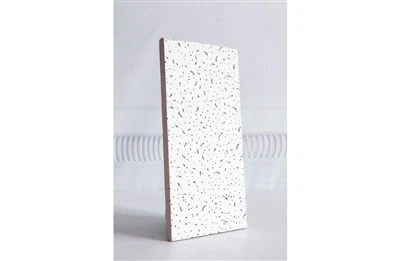
One of the most obvious differences between colored mineral fiber boards and normal ones is the appearance. Normal mineral fiber boards usually come in a standard, natural color, which is often a kind of off - white or grayish tone. It's a classic look that works well in many traditional or industrial settings.
On the other hand, colored mineral fiber boards offer a wide range of color options. Whether you're looking for a bright, bold color to make a statement in a modern office space or a more muted, earthy tone for a cozy residential area, there's a color for you. This color customization allows for more creative and personalized interior design. For example, in a kids' playroom, you could use colored mineral fiber boards in fun colors like pink, blue, or yellow to create a lively and engaging environment. You can explore some of the different types of ceiling tiles made from mineral fiber, including colored ones, here: Mineral Fiber Wool Ceiling Tiles.
Manufacturing Process
The manufacturing process also has some differences. Normal mineral fiber boards are produced with a focus on the basic properties like strength, acoustic performance, and fire resistance. The raw materials are mixed, formed into boards, and then cured under specific conditions.
For colored mineral fiber boards, an additional step is involved. After the basic board is formed, a special coloring process is carried out. This can be either by adding pigments during the mixing stage or by applying a colored coating on the surface of the board. The coloring process needs to be carefully controlled to ensure that the color is evenly distributed and that it doesn't affect the other properties of the board, such as its fire resistance or acoustic performance.
Cost
Cost is another factor to consider. Generally, colored mineral fiber boards tend to be more expensive than normal ones. The additional cost comes from the coloring process, which requires more materials and labor. Also, the pigments used in the coloring can be costly, especially if they are high - quality and fade - resistant.
However, it's important to look at the long - term value. If you're using the boards in a high - traffic area or a place where the appearance is crucial, the extra cost of colored mineral fiber boards might be worth it. They can enhance the overall aesthetic of the space, potentially increasing the value of the property.
Applications
Both colored and normal mineral fiber boards have a wide range of applications, but their use cases can differ based on their characteristics.
Normal mineral fiber boards are commonly used in industrial buildings, warehouses, and some commercial spaces where the focus is more on functionality rather than appearance. Their fire - resistant and acoustic properties make them ideal for these types of environments. For example, in a factory, normal mineral fiber boards can help reduce noise levels and provide fire protection.
Colored mineral fiber boards, as mentioned earlier, are great for interior design projects where appearance matters. They are often used in offices, hotels, restaurants, and residential homes. In an office, colored boards can be used to create different zones or to add a touch of personality to the workspace. You can see an example of a unique type of mineral fiber board, the Tegular Sand Hole Mineral Fiber Board, which could be colored or normal, here: Tegular Sand Hole Mineral Fiber Board.
Maintenance
When it comes to maintenance, both types of boards are relatively easy to maintain. Normal mineral fiber boards can be cleaned with a simple vacuum or a damp cloth to remove dust.
Colored mineral fiber boards require a bit more care, especially if they are in high - traffic areas. You need to be careful not to use abrasive cleaners that could damage the color. A mild, non - abrasive cleaner is usually sufficient to keep them looking good. Also, if there are any scratches or chips on the colored surface, they might be more noticeable compared to normal boards.
Durability
In terms of durability, both colored and normal mineral fiber boards are quite sturdy. They are resistant to moisture, mold, and pests, which makes them suitable for a variety of environments. However, the colored coating on colored mineral fiber boards might be more prone to wear and tear over time, especially in harsh conditions. But if the coloring process is done correctly and high - quality materials are used, the colored boards can last a long time without significant fading or damage.
Acoustic Performance
Both types of boards are known for their good acoustic performance. They can absorb sound waves, reducing echo and noise levels in a room. The acoustic properties mainly depend on the density and structure of the mineral fibers, rather than the color. So, whether you choose a colored or normal mineral fiber board, you can expect a certain level of sound absorption.
Fire Resistance
Fire resistance is another important aspect. Both colored and normal mineral fiber boards are made to be fire - resistant. The mineral fibers used in their production are non - combustible, which means they can help prevent the spread of fire in a building. The coloring process in colored mineral fiber boards is designed not to compromise this fire - resistant property.
In conclusion, the main differences between colored mineral fiber boards and normal mineral fiber boards lie in their appearance, manufacturing process, cost, and some aspects of maintenance. Each type has its own advantages and is suitable for different applications.
If you're interested in purchasing colored mineral fiber boards for your project, I'd love to have a chat with you. We can discuss your specific needs, color options, and pricing. Whether you're an interior designer, a contractor, or a homeowner, we have the expertise and products to meet your requirements. Let's start a conversation and see how we can make your space look and function its best!
References


- General knowledge about mineral fiber board manufacturing and properties
- Industry standards and research on colored and normal mineral fiber boards