Hey there! As a supplier of colored mineral fiber ceiling boards, I often get asked about the light - reflecting property of these awesome products. So, let's dive right in and explore what makes the light - reflecting aspect of colored mineral fiber ceiling boards so interesting.
First off, let's understand what colored mineral fiber ceiling boards are. They're made from mineral fibers, which are usually derived from natural minerals. These fibers are processed and combined with binders and other additives to form a board. The "colored" part means that they come in a variety of hues, from bright whites to warm earth tones and even some bold, vibrant colors.


Now, onto the light - reflecting property. Light reflection is all about how a surface bounces back light that hits it. When it comes to colored mineral fiber ceiling boards, the color plays a huge role in determining how much light is reflected.
White or light - colored boards are the champs when it comes to light reflection. They have a high albedo, which is a fancy term for the proportion of light that's reflected by a surface. A white colored mineral fiber ceiling board can reflect a large amount of the light that hits it. This is super useful in indoor spaces because it helps to brighten up the area. For example, in an office, a white ceiling board can make the workspace feel more open and airy. It also reduces the need for excessive artificial lighting. You know, less energy consumption means lower electricity bills, which is always a plus!
On the other hand, darker - colored boards reflect less light. They absorb more of the light energy that hits them. While this might seem like a drawback, it actually has its own set of advantages. In spaces where you want to create a more cozy and intimate atmosphere, like a restaurant's private dining area or a home theater, darker colored mineral fiber ceiling boards can work wonders. The reduced light reflection helps to control the overall lighting level and gives a more subdued and relaxing feel.
But it's not just about the color. The texture of the colored mineral fiber ceiling board also affects light reflection. A smooth - surfaced board will reflect light in a more regular way, creating a more uniform lighting effect. You can think of it like a mirror. When light hits a mirror, it bounces off at a predictable angle. Similarly, a smooth ceiling board will direct the light in a specific direction, which can be great for highlighting certain areas of a room.
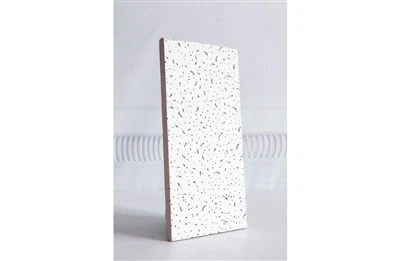
On the contrary, a textured board, like the Tegular Sand Hole Mineral Fiber Board, scatters the light. The irregular surface causes the light to bounce off in different directions. This can create a more diffused lighting effect, which is often desirable in spaces where you don't want harsh shadows. For instance, in a classroom, a textured ceiling board can help to evenly distribute the light, making it easier for students to see without being distracted by bright spots or shadows.
Another factor that impacts light reflection is the quality of the board. High - quality colored mineral fiber ceiling boards are designed to have consistent color and texture throughout. This means that the light - reflecting property is also consistent. Cheaper, lower - quality boards might have uneven color distribution or inconsistent textures, which can lead to uneven lighting in a room. So, it's always a good idea to invest in quality products.
Now, let's talk about the practical applications of the light - reflecting property of these ceiling boards. In commercial buildings, such as shopping malls, the light - reflecting ability of white or light - colored boards can be used to enhance the overall shopping experience. Brightly lit spaces make the products on display more visible and appealing. It also gives the impression of a clean and modern environment, which can attract more customers.
In residential buildings, the choice between light and dark colored boards depends on the room's function. In a living room, you might opt for a light - colored board to make the space feel more inviting and spacious. In a bedroom, a darker board could create a more restful environment.
When it comes to energy efficiency, the light - reflecting property of colored mineral fiber ceiling boards can't be overlooked. By using light - colored boards, you can reduce the amount of artificial lighting needed during the day. This not only saves energy but also helps to reduce your carbon footprint. It's a win - win situation for both your wallet and the environment.
As a supplier, I've seen firsthand how the right choice of colored mineral fiber ceiling board can transform a space. We offer a wide range of colors and textures to suit different needs and preferences. Whether you're looking for a Dampproof Acoustic Mineral Fiber Ceiling Board for a bathroom or a Mineral Fiber Board for a home office, we've got you covered.
If you're in the market for colored mineral fiber ceiling boards, I encourage you to consider the light - reflecting property as an important factor. It can have a significant impact on the look, feel, and energy efficiency of your space. And if you have any questions or want to discuss your specific requirements, don't hesitate to reach out. We're here to help you make the best choice for your project.
So, whether you're an architect, a contractor, or a homeowner looking to renovate, let's have a chat about how our colored mineral fiber ceiling boards can meet your needs. Contact us today to start the conversation and explore the possibilities!
References:
- General knowledge of building materials and lighting principles.
- Industry reports on the use of mineral fiber ceiling boards in different applications.