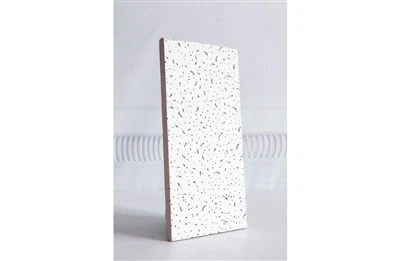
As a supplier of fine fissure mineral fiber boards, I often encounter inquiries about the load - bearing capacity of these boards. Understanding the load - bearing capacity is crucial for architects, contractors, and end - users as it directly impacts the safety and functionality of the structures where these boards are used.
What is Fine Fissure Mineral Fiber Board?
Fine fissure mineral fiber board is a type of building material made from mineral fibers, such as rock wool or slag wool. These fibers are processed and bonded together using various techniques to form a board with a fine - fissured surface. This unique surface not only gives the board an aesthetically pleasing appearance but also provides certain functional benefits.


The boards are commonly used in ceiling applications, partitions, and wall linings. They offer excellent acoustic insulation, fire resistance, and thermal insulation properties. For more information about similar products, you can visit Mineral Fiber Wool Ceiling Tiles and Square Colors Mineral Fiber Board.
Factors Affecting the Load - Bearing Capacity of Fine Fissure Mineral Fiber Board
1. Material Composition
The quality and type of mineral fibers used in the board play a significant role in determining its load - bearing capacity. High - quality mineral fibers with good strength characteristics will result in a board that can withstand more weight. Additionally, the binder used to hold the fibers together also affects the overall strength of the board. A strong and durable binder will enhance the load - bearing capacity.
2. Board Thickness
Thicker boards generally have a higher load - bearing capacity than thinner ones. As the thickness increases, the board becomes more resistant to bending and deformation under load. However, it's important to note that increasing the thickness also increases the weight of the board, which may have implications for the overall structure.
3. Installation Method
Proper installation is crucial for maximizing the load - bearing capacity of fine fissure mineral fiber boards. The boards should be installed on a stable and level surface using the appropriate fasteners. Incorrect installation, such as using the wrong type of fasteners or not spacing them correctly, can significantly reduce the board's ability to support loads.
4. Span and Support
The span between supports and the type of support structure also affect the load - bearing capacity. A shorter span between supports will allow the board to carry more weight. Different support structures, such as joists or beams, have different load - distributing capabilities, which in turn impact the board's performance.
Testing the Load - Bearing Capacity
To accurately determine the load - bearing capacity of fine fissure mineral fiber boards, standardized testing methods are used. These tests typically involve applying a gradually increasing load to the board until it fails. The maximum load that the board can withstand before failure is recorded as its load - bearing capacity.
There are different types of load - bearing tests, including point load tests and uniform load tests. Point load tests apply a concentrated load at a specific point on the board, while uniform load tests distribute the load evenly across the surface of the board.
Typical Load - Bearing Capacity Ranges
The load - bearing capacity of fine fissure mineral fiber boards can vary widely depending on the factors mentioned above. In general, for ceiling applications where the boards are mainly used for aesthetic and acoustic purposes, the load - bearing capacity may be relatively low, typically in the range of 10 - 20 pounds per square foot (psf).
For partitions and wall linings, where the boards may need to support some additional weight, such as the weight of wall - mounted fixtures, the load - bearing capacity can range from 20 - 50 psf. However, in some specialized applications where the boards are reinforced or used in combination with other structural elements, the load - bearing capacity can be even higher.
Applications Based on Load - Bearing Capacity
1. Ceiling Applications
In most ceiling applications, fine fissure mineral fiber boards are used primarily for their acoustic and aesthetic properties. Since the loads on a ceiling are relatively light, boards with a lower load - bearing capacity can be used. These boards can effectively absorb sound and provide a smooth, attractive ceiling surface. You can explore more ceiling - related products at Mineral Fiber Board, Mineral Wool Ceiling Tiles.
2. Partition Walls
Partition walls made of fine fissure mineral fiber boards need to support their own weight as well as any light fixtures or decorations attached to them. Boards with a medium load - bearing capacity are suitable for these applications. They can provide a stable and functional partition while also offering acoustic insulation.
3. Structural Applications
In some cases, fine fissure mineral fiber boards can be used in structural applications when combined with other materials. For example, they can be used as part of a composite wall system where they contribute to the overall strength and insulation of the structure. In these applications, boards with a higher load - bearing capacity are required.
Ensuring Safety and Performance
When using fine fissure mineral fiber boards in any application, it's essential to ensure that the load - bearing capacity requirements are met. Architects and engineers should carefully calculate the expected loads and select the appropriate board based on its load - bearing capacity.
Regular inspections should also be carried out to check for any signs of damage or deformation that could affect the board's load - bearing capacity. If any issues are detected, the boards should be repaired or replaced immediately to maintain the safety and performance of the structure.
Conclusion
The load - bearing capacity of fine fissure mineral fiber boards is a complex characteristic that depends on multiple factors, including material composition, board thickness, installation method, and span and support. Understanding these factors is crucial for selecting the right board for a specific application.
As a supplier, I am committed to providing high - quality fine fissure mineral fiber boards with reliable load - bearing capacities. If you are considering using these boards in your next project, I encourage you to contact me for more information and to discuss your specific requirements. Whether you need boards for ceiling applications, partition walls, or structural uses, I can help you find the best solution.
References
- ASTM International. (Year). Standard test methods for load - bearing capacity of building materials.
- Building Codes Institute. (Year). Building code requirements for structural design.