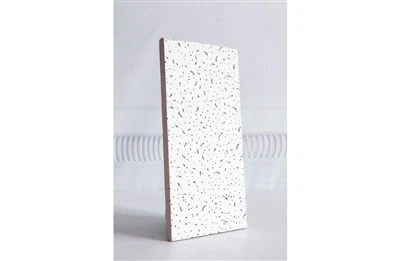
As a supplier of Square Colors Mineral Fiber Boards, I'm excited to share with you the detailed manufacturing process of these high - quality products. Square Colors Mineral Fiber Boards are widely used in interior decoration, especially for ceiling applications, due to their excellent acoustic performance, fire resistance, and aesthetic appeal.
Raw Material Preparation
The first step in the manufacturing process is the careful selection and preparation of raw materials. The primary raw material for mineral fiber boards is mineral wool, which is made from natural minerals such as basalt or diabase. These minerals are melted at extremely high temperatures, usually around 1400 - 1600 degrees Celsius, in a furnace. During the melting process, the minerals are transformed into a molten state.
Once the minerals are fully melted, they are blown with high - pressure air or steam to form fine fibers. These mineral fibers have unique properties such as high strength, good insulation, and fire - resistance. In addition to mineral wool, other additives are also used in the production of Square Colors Mineral Fiber Boards. These additives include binders, fillers, and pigments.
Binders are used to hold the mineral fibers together. Common binders include starch, synthetic resins, and latex. Fillers are added to improve the physical properties of the boards, such as density and hardness. Calcium carbonate and clay are often used as fillers. Pigments are used to give the boards their square colors. Different pigments can be mixed to create a wide range of color options, allowing customers to choose the most suitable color for their interior design.
Fiber Blending and Forming
After the raw materials are prepared, the next step is to blend the mineral fibers with the additives. The mineral fibers, binders, fillers, and pigments are mixed in a large mixer. The mixing process is crucial to ensure that all the components are evenly distributed throughout the mixture. This ensures the consistency and quality of the final product.
Once the mixture is well - blended, it is ready for forming. There are several methods for forming Square Colors Mineral Fiber Boards, but the most common method is the wet - forming process. In the wet - forming process, the blended mixture is mixed with water to form a slurry. The slurry is then poured onto a moving wire screen. As the wire screen moves, the water is drained through the screen, leaving behind a wet mat of mineral fiber mixture.
The wet mat is then passed through a series of rollers to remove excess water and to compress the mat to the desired thickness. The compression process also helps to improve the density and strength of the board. The rollers can be adjusted to control the thickness and smoothness of the board. After the compression, the wet mat is cut into the desired square shapes.
Drying and Curing
After the boards are formed, they need to be dried to remove the remaining water. The drying process is usually carried out in a large dryer. The dryer uses hot air to evaporate the water from the boards. The temperature and humidity in the dryer are carefully controlled to ensure that the boards dry evenly without cracking or warping.
The drying time depends on the thickness and density of the boards. Thicker and denser boards may take longer to dry. Once the boards are dry, they are ready for curing. Curing is a process that allows the binders in the boards to fully harden and bond the mineral fibers together. The curing process can be accelerated by heating the boards in an oven at a specific temperature for a certain period of time.
Surface Treatment and Finishing
After the drying and curing process, the Square Colors Mineral Fiber Boards are ready for surface treatment and finishing. Surface treatment is important to improve the appearance and performance of the boards. One common surface treatment is sanding. Sanding the surface of the boards can make them smoother and more uniform in appearance.
In addition to sanding, the boards can also be coated with a protective layer. The protective layer can improve the water - resistance, stain - resistance, and durability of the boards. There are different types of coatings available, such as acrylic coatings and melamine coatings. The choice of coating depends on the specific requirements of the customers.
The square colors of the boards are also enhanced during the finishing process. The pigments in the boards are further fixed and protected by the coating, ensuring that the colors remain vibrant and fade - resistant over time.
Quality Control
Throughout the manufacturing process, strict quality control measures are implemented to ensure that the Square Colors Mineral Fiber Boards meet the highest standards. Quality control starts from the raw material selection. The raw materials are tested for their quality and purity before they are used in the production.
During the manufacturing process, samples are taken at regular intervals to test the physical and chemical properties of the boards. These tests include tests for density, strength, fire - resistance, acoustic performance, and color fastness. Only the boards that pass all the quality tests are allowed to be sold as Square Colors Mineral Fiber Boards.
Applications and Advantages
Square Colors Mineral Fiber Boards have a wide range of applications. They are commonly used in commercial buildings, such as offices, shopping malls, and hotels, as well as in residential buildings. The boards can be used for ceiling installation, creating a beautiful and functional ceiling space.


One of the main advantages of Square Colors Mineral Fiber Boards is their excellent acoustic performance. The mineral fibers in the boards can absorb sound waves, reducing noise levels in the room. This makes them ideal for spaces where noise reduction is important, such as conference rooms and auditoriums.
Another advantage is their fire - resistance. Mineral fiber is a non - combustible material, which means that the boards can help to prevent the spread of fire in case of an emergency. This is an important safety feature, especially in public buildings.
The square colors of the boards also add an aesthetic touch to the interior design. Customers can choose from a variety of colors to match their interior decoration style. Whether it's a modern, minimalist design or a traditional, classic style, Square Colors Mineral Fiber Boards can provide the perfect solution.
Related Products
If you are interested in other types of mineral fiber products, you can visit our website to learn more about Mineral Fiber Ceiling Tile and Mineral Fiber Wool Ceiling Tiles. We also offer Square Sand Hole Mineral Fiber Board, which has a unique sand - hole design, adding a special texture to the interior space.
Contact for Purchase and Negotiation
If you are interested in our Square Colors Mineral Fiber Boards or any of our other products, we welcome you to contact us for purchase and negotiation. We have a professional sales team that can provide you with detailed product information, competitive prices, and excellent after - sales service. We are committed to meeting your needs and providing you with the best quality products.
References
- Building Materials Handbook, Third Edition
- Mineral Fiber Technology and Applications
- Interior Design and Decoration Principles