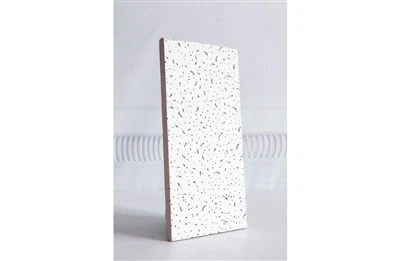
Hey there! As a supplier of colored mineral fiber ceiling boards, I'm super excited to walk you through the production process of these awesome products. Colored mineral fiber ceiling boards are not only stylish but also offer great acoustic and fire - resistant properties. So, let's dive right in!
Raw Material Selection
The first step in making colored mineral fiber ceiling boards is choosing the right raw materials. We primarily use mineral wool, which is made from natural minerals like basalt or slag. These minerals are melted at extremely high temperatures, around 1400 - 1600 degrees Celsius, and then spun into fine fibers.
Apart from mineral wool, we also add other ingredients. Binders are crucial as they hold the fibers together. We use organic or inorganic binders depending on the specific requirements of the board. Starch, for example, is a common organic binder, while silicates can be used as inorganic binders.
Filler materials are also added to improve the board's properties. Gypsum is a popular filler as it enhances the fire - resistance and stiffness of the board. And of course, pigments are added to give the boards their beautiful colors. We have a wide range of color options, from classic white to bold blues and greens.
Mixing
Once we've got all the raw materials ready, it's time for mixing. We put the mineral wool, binders, fillers, and pigments into a large mixing tank. The mixing process is carefully controlled to ensure that all the ingredients are evenly distributed.
The mixture is agitated using powerful mixers for a specific period, usually around 15 - 20 minutes. This ensures that the fibers are well - coated with the binders and fillers, and the color is uniformly dispersed throughout the mixture. During this process, we also add water to create a slurry - like consistency. The right amount of water is crucial; too much water can make the mixture too thin, while too little can result in an uneven mixture.


Forming
After the mixing is done, the next step is forming the boards. There are a few different methods we can use, but one of the most common is the wet - felt process. In this process, the slurry is poured onto a moving wire mesh conveyor belt. As the belt moves, the water drains through the mesh, leaving behind a mat of fibers and other ingredients.
The mat is then passed through a series of rollers that compress it to the desired thickness. The pressure applied by the rollers is carefully adjusted to ensure that the board has the right density and strength. We can make boards of different thicknesses, typically ranging from 9mm to 25mm, depending on the customer's needs.
Drying
Once the boards are formed, they need to be dried. We use large drying ovens for this purpose. The boards are placed on racks and moved through the oven at a controlled speed. The temperature inside the oven is usually set between 100 - 150 degrees Celsius.
The drying process can take several hours, depending on the thickness of the boards. It's important to dry the boards slowly and evenly to prevent cracking or warping. As the boards dry, the binders harden, which helps to hold the fibers together and gives the board its final strength.
Cutting and Finishing
After the boards are dry, they are cut to the desired size. We use high - precision cutting machines to ensure that the boards have clean and accurate edges. We can cut the boards into different shapes and sizes, such as squares, rectangles, or custom - made shapes.
Next comes the finishing process. This is where we add the final touches to the boards to enhance their appearance and performance. We can apply a variety of surface treatments, such as sanding, embossing, or coating.
Sanding gives the board a smooth surface, while embossing can create interesting patterns, like the Square Sand Hole Mineral Fiber Board with its unique sand - hole pattern. Coating can improve the board's resistance to moisture, stains, and wear. We use different types of coatings, including acrylic and epoxy coatings, depending on the application.
Quality Control
Throughout the production process, we have strict quality control measures in place. We test the boards at various stages to ensure that they meet our high standards. We check the density, thickness, strength, and color of the boards.
We also conduct acoustic and fire - resistance tests. For acoustic tests, we measure the board's ability to absorb sound using specialized equipment. For fire - resistance tests, we expose the boards to high temperatures to see how they perform. Only boards that pass all these tests are allowed to leave our factory.
Packaging and Shipping
Once the boards have passed all the quality control tests, they are ready for packaging. We use high - quality packaging materials to protect the boards during transportation. The boards are usually wrapped in plastic film and then placed in cardboard boxes.
We offer different packaging options depending on the customer's requirements. For large orders, we can also provide palletized packaging for easier handling and shipping. We work with reliable shipping partners to ensure that the boards are delivered to our customers in a timely and safe manner.
Different Types of Colored Mineral Fiber Ceiling Boards
We offer a wide range of colored mineral fiber ceiling boards to meet different customer needs. For example, the Tegular Pinhole Mineral Fiber Board has a unique pinhole pattern that not only looks great but also enhances the acoustic performance of the board.
The Tegular Fine Fissure Mineral Fiber Board features a fine - fissure design that adds a touch of elegance to any space. These boards are available in a variety of colors, so you can choose the one that best suits your interior design.
If you're in the market for high - quality colored mineral fiber ceiling boards, we'd love to hear from you. Whether you're a contractor, an architect, or a homeowner, we can provide you with the perfect solution for your ceiling needs. Just reach out to us to start a procurement discussion, and we'll work with you to find the best products at the most competitive prices.
References
- Mineral Wool Manufacturers Association. "Guide to Mineral Wool Production."
- Building Materials Research Institute. "Properties and Production of Colored Mineral Fiber Boards."