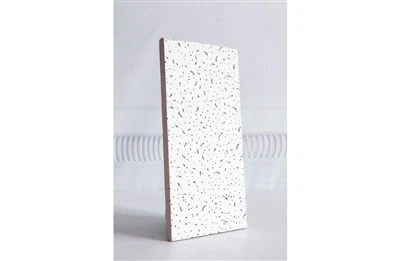
Sand acoustic mineral fiber boards are widely used in various building projects for their excellent acoustic performance, fire resistance, and aesthetic appeal. As a trusted supplier of sand acoustic mineral fiber boards, I am delighted to share with you the detailed production process of these remarkable products.
Raw Material Preparation
The production of sand acoustic mineral fiber boards begins with the careful selection and preparation of raw materials. The primary raw materials include mineral fibers, binders, and sand. Mineral fibers are typically obtained from natural minerals such as basalt or slag, which are melted at high temperatures and then spun into fine fibers. These fibers provide the board with its strength and acoustic properties.
Binders are used to hold the mineral fibers together and give the board its shape. Common binders include starch, synthetic resins, and inorganic binders. The choice of binder depends on the specific requirements of the board, such as its strength, fire resistance, and environmental friendliness.
Sand is added to the mixture to enhance the board's acoustic performance and give it a unique texture. The sand used in the production of sand acoustic mineral fiber boards is typically fine-grained and has a specific particle size distribution to ensure optimal acoustic properties.
Mixing
Once the raw materials are prepared, they are mixed together in a large mixer. The mixing process is crucial to ensure that the mineral fibers, binders, and sand are evenly distributed throughout the mixture. This helps to ensure the consistency and quality of the final product.
During the mixing process, water is also added to the mixture to create a slurry. The amount of water added depends on the specific requirements of the board and the type of binder used. The slurry is then agitated for a specific period of time to ensure that all the ingredients are thoroughly mixed.
Forming
After the mixing process is complete, the slurry is transferred to a forming machine. The forming machine uses a combination of pressure and heat to shape the slurry into the desired board size and thickness. There are several different types of forming machines available, including continuous forming machines and batch forming machines.
Continuous forming machines are typically used for large-scale production of sand acoustic mineral fiber boards. These machines can produce boards continuously at a high speed, making them ideal for mass production. Batch forming machines, on the other hand, are used for smaller-scale production or for producing boards with special requirements.
Drying
Once the boards are formed, they are transferred to a drying oven. The drying process is essential to remove the moisture from the boards and to cure the binders. The drying temperature and time depend on the specific requirements of the board and the type of binder used.
During the drying process, the boards are typically heated to a temperature of around 100-200°C for several hours. This helps to ensure that the boards are completely dry and that the binders are fully cured. The dried boards are then cooled down to room temperature before being further processed.
Cutting and Finishing
After the drying process is complete, the boards are cut to the desired size and shape using a cutting machine. The cutting machine can be programmed to cut the boards to specific dimensions, ensuring that they meet the requirements of the customer.
Once the boards are cut, they may undergo additional finishing processes to enhance their appearance and performance. These finishing processes may include sanding, painting, or laminating. Sanding is used to smooth the surface of the boards and to remove any rough edges or imperfections. Painting is used to add color and protection to the boards, while laminating is used to add a decorative layer to the boards.
Quality Control
Throughout the production process, strict quality control measures are implemented to ensure that the sand acoustic mineral fiber boards meet the highest standards of quality and performance. Quality control checks are conducted at every stage of the production process, from raw material inspection to final product testing.
Raw materials are inspected for their quality and purity before being used in the production process. During the mixing and forming processes, samples are taken regularly to ensure that the mixture is consistent and that the boards are being formed correctly. After the drying and finishing processes, the boards are tested for their physical and mechanical properties, such as strength, density, and acoustic performance.
Packaging and Shipping
Once the sand acoustic mineral fiber boards have passed all the quality control checks, they are packaged and prepared for shipping. The boards are typically packaged in cardboard boxes or wooden crates to protect them during transportation. The packaging is designed to ensure that the boards are securely held in place and that they are protected from damage.
The packaged boards are then shipped to the customer's location using a reliable shipping carrier. The shipping time and cost depend on the customer's location and the quantity of boards being shipped.


Conclusion
In conclusion, the production process of sand acoustic mineral fiber boards is a complex and highly technical process that requires careful attention to detail and strict quality control measures. As a supplier of sand acoustic mineral fiber boards, we are committed to providing our customers with high-quality products that meet their specific requirements.
If you are interested in purchasing sand acoustic mineral fiber boards for your building project, please do not hesitate to contact us. We would be happy to discuss your requirements and provide you with a quote. You can also visit our website to learn more about our products and services: Mineral Fiber Ceiling Tile, Tegular Sand Hole Mineral Fiber Board, Tegular Pinhole Mineral Fiber Board.
References
- ASTM C662-15, Standard Specification for Mineral-Fiber Acoustical Ceiling Materials.
- ISO 11654:1997, Acoustics - Rating of sound absorbers.
- EN 13964:2013, Building hardware - Windows and doors - Determination of air permeability, water tightness and resistance to wind load.