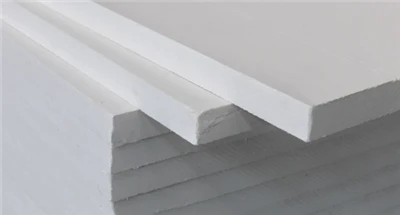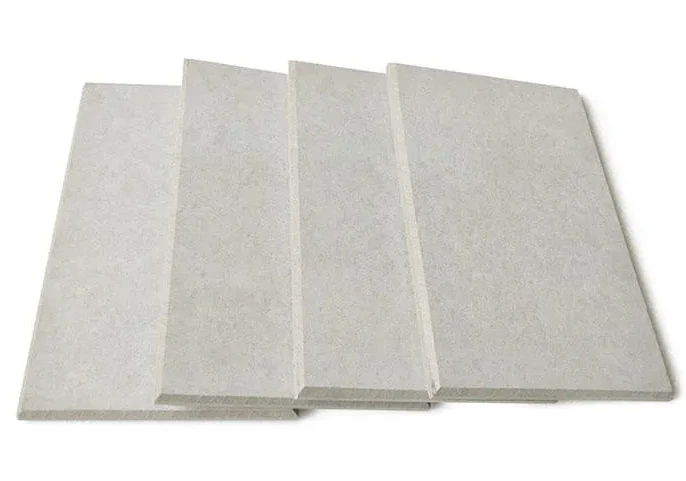
When international procurement managers source calcium silicate boards, choosing the right technical specifications is critical to project success and cost efficiency. As a premier green building material, calcium silicate board is celebrated for its Class A1 fire rating, water resistance, and durability. However, performance varies greatly depending on density and edge profiles.
Here is the essential industry knowledge you need to optimize your supply chain.
1. Classification by Density: Low, Medium, and High
Calcium silicate boards are classified into three primary density tiers, each suited for distinct architectural applications:
Low Density (< 0.8 g/cm³): Highly porous with excellent thermal insulation and acoustic properties. It is lightweight and primarily used for indoor suspended ceilings and passive fire protection wraps.
Medium Density (0.8 – 1.1 g/cm³): The most versatile category. It balances high strength with ease of installation. Perfect for interior partition walls, drywall substrates, and moisture-prone areas like bathrooms and kitchens.
High Density (> 1.1 g/cm³): Heavy-duty, high-impact boards. They feature exceptional dimensional stability and weather resistance, making them the standard choice for exterior wall cladding, industrial fire walls, and flooring underlayments.
2. Edge Profiles: Sloped, Beveled, and Square
The edge finish of the board directly impacts installation speed and the final aesthetic quality of the wall or ceiling:
Square Edge (SE): Flat, 90-degree edges. These are typically used for industrial cladding, t-grid ceiling layouts, or multi-layer fireproofing where seamless surface plastering is not required.
Beveled Edge (BE): Features a subtle chamfer. The recessed groove created between two joined boards allows joint tape and compound to sit perfectly flush, resulting in a seamless Level 5 wall finish that resists cracking.
Sloped / Tapered Edge: Specifically engineered for specialized roofing drainage systems or acoustic plaster designs, allowing for superior load distribution and water shedding.
3. Key Procurement Checklist for Global Importers
To ensure smooth customs clearance and project approval, verify that your Chinese manufacturing partner provides:
International Certifications: Look for CE (EN 12467) compliance for European markets and ASTM C656 for North American projects.
100% Asbestos-Free Guarantee: Ensure the supplier uses premium quartz sand, lime, and natural cellulose fibers, backed by verified third-party test reports (SGS/TUV).
Export-Ready Packaging: Boards must be packed on reinforced wooden pallets with plastic corner protectors and waterproof shrink wrap to endure long ocean freight journeys.