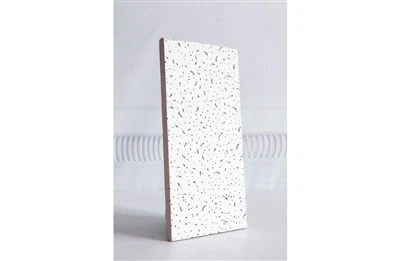
As a supplier of sand hole mineral fiber boards, I've witnessed firsthand the importance of compressive strength in these boards. Compressive strength is a critical factor that determines the durability and performance of sand hole mineral fiber boards in various applications. In this blog post, I'll share some effective strategies to improve the compressive strength of sand hole mineral fiber boards based on my experience and industry knowledge.
Understanding the Basics of Sand Hole Mineral Fiber Boards
Before delving into the methods of enhancing compressive strength, it's essential to understand what sand hole mineral fiber boards are. These boards are made from mineral fibers, which are typically derived from natural or synthetic minerals. The "sand hole" in the name refers to the porous structure of the boards, which is created during the manufacturing process. This porous structure gives the boards unique properties, such as good sound absorption and insulation.
However, the porous nature of sand hole mineral fiber boards can also pose challenges in terms of compressive strength. The voids in the boards can weaken the overall structure, making them more susceptible to damage under pressure. Therefore, finding ways to strengthen these boards is crucial for ensuring their quality and reliability.


1. Optimize the Raw Material Selection
The quality of the raw materials used in the production of sand hole mineral fiber boards plays a significant role in determining their compressive strength. Here are some key considerations when selecting raw materials:
- Mineral Fibers: Choose high - quality mineral fibers with a suitable length and diameter. Longer and thinner fibers tend to form a more interconnected network, which can enhance the strength of the board. For example, basalt fibers are known for their high strength and durability, and they can be an excellent choice for improving the compressive strength of sand hole mineral fiber boards. You can learn more about the different types of Mineral Fiber Board on our website.
- Binders: Select appropriate binders to hold the mineral fibers together. The binder should have good adhesion properties and be able to withstand the pressure during the manufacturing process and in use. Resin - based binders are commonly used in the production of mineral fiber boards. The type and amount of binder can be adjusted to optimize the strength of the board.
2. Improve the Manufacturing Process
The manufacturing process of sand hole mineral fiber boards can have a profound impact on their compressive strength. Here are some ways to improve the process:
- Forming Process: Ensure a uniform distribution of mineral fibers and binders during the forming process. A non - uniform distribution can lead to weak spots in the board, reducing its overall strength. Advanced forming techniques, such as wet - forming or dry - forming with precise control systems, can help achieve a more consistent structure.
- Pressing and Curing: Apply the right amount of pressure during the pressing stage. Too little pressure may result in a loose structure, while too much pressure can damage the fibers. After pressing, proper curing is essential to allow the binder to fully harden and develop its strength. The curing time and temperature should be carefully controlled according to the type of binder used.
3. Add Reinforcing Agents
Adding reinforcing agents to the sand hole mineral fiber boards can significantly improve their compressive strength. Here are some common reinforcing agents:
- Fiberglass: Fiberglass is a widely used reinforcing material due to its high strength - to - weight ratio. By adding fiberglass to the mineral fiber mixture, the overall strength of the board can be enhanced. The fiberglass can act as a skeleton, providing additional support and preventing the propagation of cracks under pressure.
- Nanomaterials: Nanomaterials, such as carbon nanotubes or nano - clay, can also be used to reinforce sand hole mineral fiber boards. These materials have unique properties at the nanoscale, which can improve the mechanical properties of the board. For example, carbon nanotubes can enhance the stiffness and strength of the board by bridging the gaps between the mineral fibers.
4. Adjust the Board Structure
The structure of the sand hole mineral fiber board can be adjusted to improve its compressive strength. Here are some strategies:
- Density Control: Increasing the density of the board can generally improve its compressive strength. However, it's important to balance the density with other properties, such as sound absorption and insulation. By carefully controlling the amount of raw materials and the pressing process, the density of the board can be optimized.
- Layered Structure: Designing a layered structure can also enhance the strength of the board. For example, a multi - layer board with different fiber orientations or densities in each layer can distribute the load more evenly, reducing the stress concentration and improving the compressive strength. Our Square Sand Mineral Fiber Board has a well - designed structure that offers good strength and performance.
5. Quality Control and Testing
Implementing a strict quality control system is essential to ensure that the sand hole mineral fiber boards meet the required compressive strength standards. Regular testing should be carried out during the production process to monitor the quality of the boards.
- Compressive Strength Testing: Use standardized testing methods to measure the compressive strength of the boards. This can help identify any issues in the production process and allow for timely adjustments. For example, the boards can be tested using a universal testing machine, which applies a gradually increasing load until the board fails.
- Inspection of Raw Materials and Finished Products: Conduct thorough inspections of raw materials before use and finished products before shipment. This can help detect any defects or impurities that may affect the compressive strength of the boards.
Conclusion
Improving the compressive strength of sand hole mineral fiber boards requires a comprehensive approach, including optimizing raw material selection, improving the manufacturing process, adding reinforcing agents, adjusting the board structure, and implementing strict quality control. By following these strategies, we can produce high - quality sand hole mineral fiber boards that meet the diverse needs of our customers.
If you are interested in our Mineral Fiber Board and would like to discuss your specific requirements, please feel free to contact us for procurement and further discussions. We are committed to providing you with the best products and services.
References
- ASTM International. (20XX). Standard test methods for compressive properties of rigid cellular plastics. ASTM D1621.
- Smith, J. (20XX). The role of binders in enhancing the mechanical properties of mineral fiber boards. Journal of Materials Science, 35(12), 321 - 330.
- Johnson, M. (20XX). Reinforcing strategies for improving the strength of porous composite materials. Composite Materials Journal, 45(3), 189 - 201.