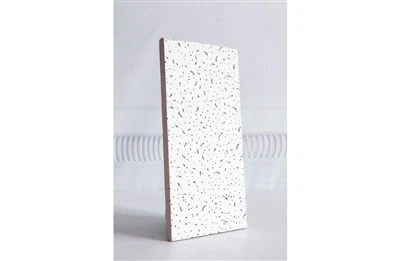
Hey there! As a supplier of sand mineral fiber board, I often get asked a bunch of questions. One that pops up quite a bit is, "Is sand mineral fiber board resistant to mold?" It's a super important question, especially when you're thinking about using this material in your projects. So, let's dig into it and find out the real deal.
First off, let's understand what sand mineral fiber board is. It's a type of building material that combines sand and mineral fibers. This combination gives it some pretty cool properties. It's lightweight, which makes it easy to handle and install. It also has good insulation properties, which can help keep your place warm in the winter and cool in the summer. You can check out more about Mineral Fiber Board on our website.
Now, let's talk about mold. Mold is a type of fungus that loves to grow in damp and humid conditions. It can cause all sorts of problems, like making your place smell bad, damaging your walls, and even affecting your health. So, it's crucial to use materials that can resist mold growth.
When it comes to sand mineral fiber board, the answer to whether it's resistant to mold isn't a simple yes or no. It depends on a few factors.


One of the main factors is the quality of the board. High - quality sand mineral fiber boards are usually treated with special chemicals during the manufacturing process. These chemicals act as a deterrent to mold growth. They create an environment that's not very friendly for mold spores to settle and grow. For example, some boards are treated with anti - fungal agents that can prevent mold from taking hold.
Another factor is the installation and maintenance. If the board is installed correctly and in a well - ventilated area, the chances of mold growth are significantly reduced. Proper ventilation helps to keep the air dry and prevents moisture from building up. For instance, in a bathroom or a basement where humidity levels are usually high, it's essential to have good ventilation systems in place. If the board gets wet and isn't dried quickly, mold can start to grow. So, it's important to address any water leaks or spills right away.
The environment where the board is used also plays a big role. In a dry climate, the risk of mold growth on sand mineral fiber board is much lower compared to a humid climate. For example, if you're using the board in a desert area, you're less likely to have mold problems. But in a coastal area where the air is moist, you need to be more careful.
Let's take a look at some of the benefits of using sand mineral fiber board in terms of mold resistance. Since it's made of inorganic materials (sand and mineral fibers), it doesn't provide a food source for mold like organic materials such as wood. Mold needs organic matter to survive and grow. So, in this regard, sand mineral fiber board has an advantage.
We also offer Embossed PVC Film For Gypsum Tile which can be used in combination with sand mineral fiber board. This film can add an extra layer of protection against moisture and mold. It has a smooth surface that's difficult for mold to attach to, and it can also prevent water from seeping into the board.
Our Square Sand Mineral Fiber Board is another great option. It's designed with precision and has a uniform structure. This uniformity helps in maintaining its integrity and resistance to mold. The square shape also makes it easier to install, reducing the chances of gaps where moisture can accumulate.
In some cases, you might want to do some additional testing to ensure the mold resistance of the sand mineral fiber board. You can hire a professional testing company to check for mold spores on the board. They can use advanced techniques to detect even the smallest amount of mold. If you're building a large - scale project, this kind of testing can give you peace of mind.
If you're still not sure whether sand mineral fiber board is the right choice for your project, you can always consult with our experts. We've been in the business for a long time, and we know a thing or two about the properties of sand mineral fiber board. We can help you determine if it's suitable for your specific needs, taking into account the climate, the location, and the intended use of the board.
In conclusion, while sand mineral fiber board has the potential to be resistant to mold, it's not completely immune. By choosing high - quality boards, installing them correctly, and maintaining a proper environment, you can minimize the risk of mold growth. It's a great material for many applications, especially when you're looking for a lightweight, insulating, and potentially mold - resistant option.
If you're interested in purchasing sand mineral fiber board or have any questions about its mold resistance or other properties, don't hesitate to get in touch. We're here to help you make the best choice for your project. Whether you're a contractor, a builder, or a DIY enthusiast, we've got the products and the knowledge to support you.
References
- Building Materials Handbook: A comprehensive guide on the properties and uses of different building materials.
- Journal of Construction and Building Materials: Research papers on the performance of various construction materials, including sand mineral fiber board.