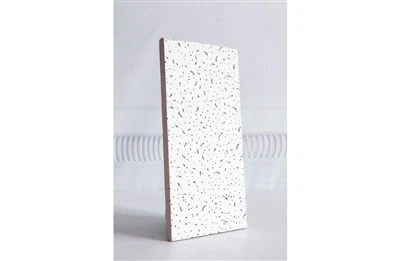
Hey there! As a supplier of acoustic mineral fiber boards, I've been getting a lot of questions lately about the impact of these boards on low-frequency noise. So, I thought I'd sit down and write a blog post to share what I've learned over the years in the industry.
First off, let's talk about what acoustic mineral fiber boards are. These boards are made from mineral fibers, usually derived from basalt or slag. They're popular for their sound-absorbing properties and are commonly used in commercial and residential buildings. You can check out our Mineral Fiber Ceiling and Mineral Fiber Board, Mineral Wool Ceiling Tiles for more info on the different types we offer.
Now, onto the main question: What's the impact of acoustic mineral fiber board on low-frequency noise? Low-frequency noise is a bit of a tricky beast. It's often associated with things like traffic, machinery, and HVAC systems. Unlike high-frequency noise, which can be easily absorbed by many materials, low-frequency noise has longer wavelengths and can penetrate through walls and ceilings more easily.


Acoustic mineral fiber boards are designed to absorb sound energy. When sound waves hit the board, the fibers inside the board vibrate, converting the sound energy into heat energy. This process reduces the amount of sound that is reflected back into the room. However, the effectiveness of acoustic mineral fiber boards in absorbing low-frequency noise depends on a few factors.
One of the key factors is the density of the board. Generally, denser boards are better at absorbing low-frequency noise. This is because the denser the board, the more mass it has, and the more difficult it is for low-frequency sound waves to pass through. Our Tegular Sand Mineral Fiber Board is a great example of a high-density board that offers excellent low-frequency noise absorption.
Another factor is the thickness of the board. Thicker boards also tend to be more effective at absorbing low-frequency noise. This is because the sound waves have to travel through more material, which gives the fibers more opportunity to absorb the sound energy. However, it's important to note that increasing the thickness of the board also increases the cost, so you need to find a balance between performance and budget.
The installation method also plays a role in the board's ability to absorb low-frequency noise. If the boards are installed correctly, with proper sealing and insulation, they can provide better noise reduction. For example, using acoustic sealant around the edges of the boards can prevent sound from leaking through the gaps.
In some cases, acoustic mineral fiber boards may not be enough to completely eliminate low-frequency noise. In these situations, it may be necessary to combine them with other noise control measures, such as adding mass-loaded vinyl or using double walls.
So, what are the benefits of using acoustic mineral fiber boards for low-frequency noise control? Well, for starters, they're relatively inexpensive compared to some other noise control solutions. They're also easy to install, which can save you time and money on labor costs. Additionally, acoustic mineral fiber boards are fire-resistant, which is an important safety feature in many buildings.
However, there are also some limitations to using acoustic mineral fiber boards for low-frequency noise control. As I mentioned earlier, they may not be able to completely eliminate low-frequency noise, especially in high-noise environments. They also require proper installation to be effective, so if you're not experienced in installing these boards, it's best to hire a professional.
In conclusion, acoustic mineral fiber boards can have a significant impact on low-frequency noise, but their effectiveness depends on a variety of factors. If you're dealing with low-frequency noise in your building, I recommend consulting with a professional acoustician to determine the best solution for your specific needs. And if you're interested in purchasing acoustic mineral fiber boards, feel free to reach out to me. I'd be happy to help you find the right product for your project.
If you have any questions or would like to discuss your acoustic needs further, don't hesitate to get in touch. We're here to assist you in finding the perfect acoustic solution for your space. Whether you're a builder, architect, or just a homeowner looking to reduce noise in your home, we've got the expertise and products to help you out.
References
- "Acoustics: Fundamentals and Applications" by Leo L. Beranek
- "Noise Control Engineering: Principles and Applications" by Craig A. Hansen and David A. Wilson