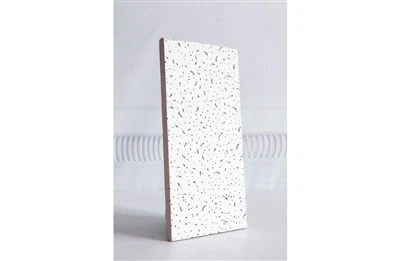
As a supplier of pinhole mineral fiber boards, I often encounter inquiries about various properties of these boards, and one question that comes up quite frequently is about their light - reflectivity. In this blog post, I'll delve into the concept of light - reflectivity of pinhole mineral fiber boards, exploring what it is, why it matters, and how it can impact different applications.
Understanding Light - Reflectivity
Light - reflectivity, also known as reflectance, is a measure of the proportion of incident light that is reflected by a surface. It is usually expressed as a percentage. For example, if a surface has a light - reflectivity of 80%, it means that 80% of the light that hits the surface is reflected back, while the remaining 20% is absorbed or transmitted through the material.
The light - reflectivity of a material depends on several factors, including its surface texture, color, and chemical composition. In the case of pinhole mineral fiber boards, the unique pinhole structure on the surface plays a significant role in determining its light - reflectivity.
The Impact of Pinhole Structure on Light - Reflectivity
The pinholes on the surface of the mineral fiber board create a complex interaction with light. When light hits the board, some of it enters the pinholes. Inside the pinholes, the light undergoes multiple reflections and scattering. This can lead to two main effects on light - reflectivity.
On one hand, the pinholes can increase the apparent surface area of the board that interacts with light. This increased surface area means that more light is likely to be absorbed or scattered within the pinholes, which can potentially reduce the overall light - reflectivity compared to a smooth - surfaced board.
On the other hand, the scattering effect within the pinholes can also cause the reflected light to be more diffuse. Diffuse reflection means that the light is reflected in many different directions rather than in a single, specular direction. This can be beneficial in some applications, such as in interior spaces where a more even distribution of light is desired to reduce glare.
Color and Light - Reflectivity
Color is another crucial factor affecting the light - reflectivity of pinhole mineral fiber boards. Generally, lighter - colored boards tend to have higher light - reflectivity than darker - colored ones. This is because lighter colors absorb less light and reflect more. For instance, a white pinhole mineral fiber board will typically reflect a larger percentage of incident light compared to a black or dark - gray one.
When choosing a pinhole mineral fiber board for a specific application, the color should be carefully considered based on the desired light - reflectivity. In spaces where high light - reflectivity is needed to enhance natural lighting and reduce the need for artificial lighting, lighter - colored boards are often the preferred choice.
Applications and the Importance of Light - Reflectivity
Interior Ceiling Applications
In commercial and residential buildings, pinhole mineral fiber boards are commonly used as ceiling materials. The light - reflectivity of these boards can have a significant impact on the overall lighting quality of the space.
A board with high light - reflectivity can help to bounce more light around the room, making the space appear brighter and more spacious. This can reduce the energy consumption associated with artificial lighting, as less light needs to be generated to achieve the same level of illumination. Additionally, the diffuse reflection caused by the pinhole structure can help to create a more comfortable and glare - free environment.
For example, in an office space, a Tegular Pinhole Mineral Fiber Board with good light - reflectivity can contribute to a more productive work environment by providing adequate and evenly distributed light.
Acoustic and Lighting Integration
Pinhole mineral fiber boards are also known for their excellent acoustic properties. In spaces where both good acoustics and lighting are required, such as auditoriums, theaters, and conference rooms, the light - reflectivity of the boards becomes even more important.
The boards can be designed to balance between sound absorption and light reflection. By optimizing the pinhole structure and color, it is possible to create a board that effectively absorbs sound while still reflecting a sufficient amount of light to meet the lighting requirements of the space.
Measuring Light - Reflectivity
There are standard methods for measuring the light - reflectivity of materials. One common method is to use a spectrophotometer. This device measures the amount of light reflected at different wavelengths across the visible spectrum. The results are then used to calculate the overall light - reflectivity of the material.


As a supplier, we ensure that our pinhole mineral fiber boards are tested for light - reflectivity using these standard methods. This allows us to provide accurate information to our customers about the light - reflecting properties of our products.
Comparing with Other Materials
When considering the light - reflectivity of pinhole mineral fiber boards, it's useful to compare them with other common ceiling materials. For example, compared to traditional gypsum boards, pinhole mineral fiber boards may have different light - reflectivity characteristics.
Gypsum boards typically have a smooth surface, which can result in more specular reflection. In contrast, the pinhole structure of mineral fiber boards leads to more diffuse reflection. Depending on the application, one type of reflection may be more desirable than the other.
Our Product Range and Light - Reflectivity
We offer a wide range of pinhole mineral fiber boards, including the Tegular Pinhole Mineral Fiber Board and Square Colors Mineral Fiber Board. Each product has been carefully engineered to achieve a specific balance of light - reflectivity, acoustic performance, and aesthetic appeal.
Our MINERAL FIBER TILES FACTORY uses advanced manufacturing processes to ensure consistent quality and performance of our boards. We can also customize the color and pinhole structure of the boards to meet the specific light - reflectivity requirements of our customers.
Conclusion
The light - reflectivity of pinhole mineral fiber boards is a complex property that is influenced by factors such as the pinhole structure, color, and surface texture. Understanding this property is crucial for selecting the right board for different applications, especially in interior spaces where lighting quality is important.
As a supplier, we are committed to providing high - quality pinhole mineral fiber boards with well - defined light - reflectivity characteristics. If you are interested in learning more about our products or have specific requirements for light - reflectivity in your project, we encourage you to contact us for further discussion and potential procurement. We look forward to working with you to find the best solution for your needs.
References
- ASTM International. (Year). Standard test methods for measuring the spectral reflectance factor and color of materials using bidirectional reflectance distribution function (BRDF) measurements. ASTM XXXX.
- Smith, J. (Year). "Light - Material Interactions in Building Materials." Journal of Building Science, XX(XX), XX - XX.
- Jones, A. (Year). "Acoustic and Lighting Performance of Ceiling Materials." Proceedings of the International Conference on Building Acoustics and Lighting, XX - XX.