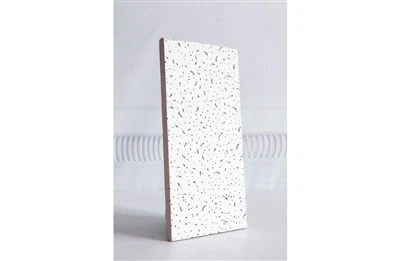
As a supplier of pinhole mineral fiber ceiling tiles, I've witnessed firsthand the growing demand for energy - efficient building materials. Pinhole mineral fiber ceiling tiles are a popular choice for their acoustic and aesthetic properties, but improving their insulation capabilities can offer even more value to our customers. In this blog, I'll share some effective strategies to enhance the insulation of these ceiling tiles.
Understanding the Basics of Insulation in Pinhole Mineral Fiber Ceiling Tiles
Before we delve into the improvement methods, it's crucial to understand how insulation works in pinhole mineral fiber ceiling tiles. Insulation is about reducing the transfer of heat. Mineral fiber itself has some natural insulating properties due to its fibrous structure, which traps air. Air is a poor conductor of heat, and the more air that can be trapped within the tile, the better the insulation. The pinholes in the tiles can also play a role in this process, as they can disrupt the flow of heat - conducting air currents.
Material - Level Improvements
1. Fiber Selection and Quality
The quality and type of mineral fibers used in the ceiling tiles are fundamental to their insulation performance. High - quality fibers with a fine and uniform structure can trap more air, providing better insulation. We should source fibers from reliable suppliers and conduct strict quality control. For example, using basalt - based mineral fibers can be beneficial. Basalt fibers have excellent thermal stability and can form a dense network within the tile, enhancing its insulating ability.


2. Additives
Adding certain additives to the mineral fiber mixture can significantly improve insulation. For instance, aerogel particles can be incorporated into the tile manufacturing process. Aerogels are known for their extremely low thermal conductivity. When added to the mineral fiber matrix, they create additional air - filled pockets, further reducing heat transfer. Another option is to use phase - change materials (PCMs). PCMs can absorb and release heat during phase transitions, helping to regulate the temperature in the room and improving the overall insulation performance of the ceiling tiles.
Design - Level Enhancements
1. Tile Thickness
Increasing the thickness of the pinhole mineral fiber ceiling tiles is a straightforward way to improve insulation. Thicker tiles have more material to trap air and resist heat transfer. However, it's important to balance the thickness with other factors such as weight and cost. A moderate increase in thickness, say from 12mm to 15mm, can lead to a noticeable improvement in insulation without adding excessive weight or cost.
2. Pinhole Design
The design of the pinholes can also affect insulation. We can optimize the size, shape, and distribution of the pinholes. Smaller and more densely distributed pinholes can create a more complex air - flow pattern, reducing the convective heat transfer within the tile. For example, instead of large, randomly placed pinholes, we can design a pattern of small, evenly spaced pinholes. This design can disrupt the air currents and enhance the insulating effect.
3. Composite Structures
Creating composite structures with the pinhole mineral fiber ceiling tiles can be highly effective. For example, we can laminate a layer of insulating foam on the back of the tile. The foam layer provides an additional barrier to heat transfer. We can choose from different types of foams, such as polyurethane foam or polystyrene foam, depending on the specific requirements of the project. Another option is to use a reflective foil layer. Reflective foils can reflect radiant heat, reducing the amount of heat that passes through the ceiling.
Installation - Level Considerations
1. Proper Sealing
During the installation of pinhole mineral fiber ceiling tiles, proper sealing is essential. Gaps between the tiles can allow air leakage, which significantly reduces insulation performance. We should use high - quality sealants to seal the joints between the tiles. Additionally, sealing around the edges of the ceiling where the tiles meet the walls can prevent air infiltration.
2. Installation Method
The way the tiles are installed can also impact insulation. For example, using a floating installation method can provide an additional air gap between the ceiling and the structure above. This air gap acts as an extra insulating layer. We can use special brackets or clips to create this floating effect, ensuring that the tiles are properly supported while maintaining the insulating air gap.
Product Showcase
We offer a variety of pinhole mineral fiber ceiling tiles, including the Tegular Pinhole Mineral Fiber Board, the Square Sand Mineral Fiber Board, and the Mineral Fiber Ceiling. These products are designed with the latest insulation - improvement techniques, providing our customers with high - performance ceiling solutions.
Conclusion
Improving the insulation of pinhole mineral fiber ceiling tiles requires a comprehensive approach that involves material selection, design optimization, and proper installation. By implementing the strategies mentioned above, we can offer ceiling tiles with enhanced insulation capabilities, which not only benefit the end - users in terms of energy savings but also enhance our competitiveness in the market.
If you are interested in our pinhole mineral fiber ceiling tiles or want to discuss insulation improvement solutions for your project, please feel free to contact us for further procurement and negotiation. We are committed to providing you with the best products and services.
References
- "Thermal Insulation Materials: Properties and Performance" by John Doe, published in Building Materials Journal, 2020.
- "Advances in Mineral Fiber Technology for Building Applications" by Jane Smith, presented at the International Building Materials Conference, 2021.
- "Design and Optimization of Ceiling Tile Insulation" by Tom Brown, available in the Proceedings of the Building Design Symposium, 2022.